
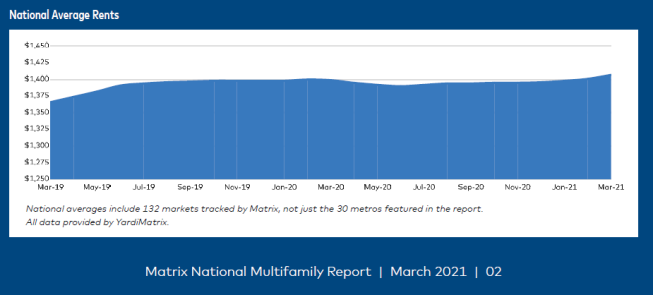
Multifamily rents rose by 0.6% on a year-over-year basis in March, according to the latest data from the Yardi Matrix Multifamily National report. Overall rents also rose by $6 in March, up to $1,407.
The first quarter of 2021 marks the strongest first quarter for several years in the industry, with rents up 0.8%. Most of the areas surveyed by Yardi Matrix—114 out of 134—showed either flat or positive rent growth, and even gateway markets are beginning a slow climb back.
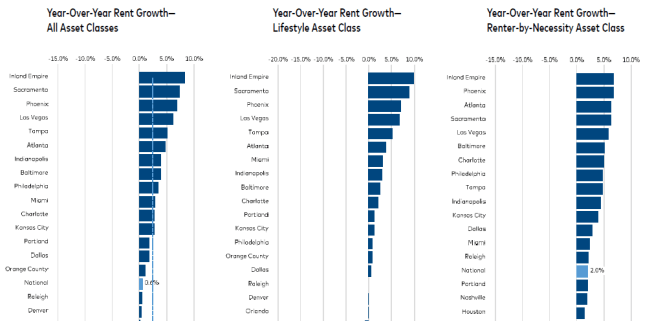
Out of the top 30 metros, 19 posted flat or positive YOY rent growth. California’s Inland Empire led the top 30 markets in rent growth, up 8.3% YOY. Sacramento, California, followed at 7.3%, with Phoenix in third at 6.9%. The sharpest rent declines are associated with cities hard-hit by remote work and migration out of urban cores, with New York at -13.6% and San Jose at -12%—though Yardi believes these markets have bottomed.
Rents rose by 0.4% month to month in March, up 20 basis points from February. Sacramento led the major markets in short-term rent growth at 1%, followed by San Jose at 0.9%. Out of the top 30 markets, 26 had flat or positive month-over-month rent growth in March.
While Raleigh, North Carolina, stands as an outlier at -0.9%, Yardi attributes this loss to a wealth of new supply in the market. Out of the top 30 metros, Austin, Texas, has the highest share of completions as a percentage of stock over the last 12 months at 4.4%, followed by Raleigh and the Twin Cities at 3.9%. In all of these cities, large shares of deliveries as a percentage of stock have contributed to relatively flat YOY rent growth, showing a direct connection between large supply pipelines and the potential of an apartment market to recover quickly. Yardi expects robust new supply to create further challenges for gateway markets.
The recent enactment of the American Rescue Plan has added $1.9 trillion to the economy, and the most recent stimulus packages have provided a combined total of $50 billion in emergency rental assistance and other support. At the same time, jobless claims have fallen to 684,000 in the week ending March 20—the lowest number since the beginning of the pandemic. Yardi anticipates the stimulus funding will have a positive effect on the industry through 2021, buoyed by ongoing vaccinations and reopening cities.