
Ron Jackson Artistry
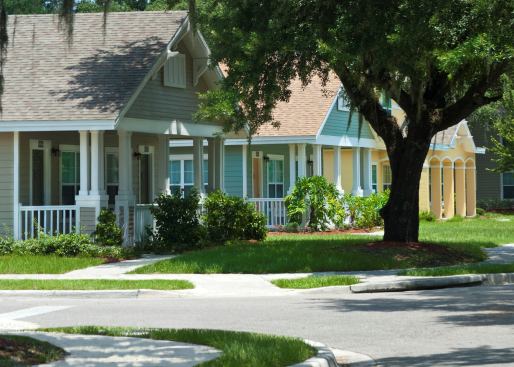
The Michaels Organization worked with the Housing Authority of t…
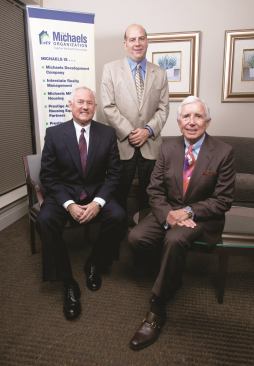
Bob Greer doesn’t have much time for lunch. It’s October, and the president of Marlton, N.J.–based Michaels Development Co., a subsidiary of The Michaels Organization, is on his way to Capitol Hill to meet with the staff of the members of the Joint Select Committee on Deficit Reduction, aka the Supercommittee, about the importance of saving the low-income housing tax credit (LIHTC) if tax reform efforts eliminate tax deductions or credits. In between bites of his burger at the swanky Madison Hotel in Washington, D.C., Greer tries to quickly describe how his company nabbed the No. 1 spot in the 2011 Multifamily Executive Top 50 Builders list, while also explaining how the policymakers he will soon meet could affect that ranking.
On the surface, Greer’s trip to Capitol Hill may not seem as though it will have much impact on Michaels’ pipeline, but in many respects, it’s vital. Greer believes affordable housing—and, specifically, the LIHTC, which the company has used to build more than 70 affordable communities since 1987—is under attack. If that financing vehicle is discontinued, a big part of Michaels’ method of production could disappear as well.
“It’s coming down to the wire on corporate tax reform,” Greer says. “It’s down to changing it all [the tax system], which means there goes the LIHTC program, or something lesser than that. We don’t know where they are. We’re trying to help them understand how critical this is.”
Even if Greer doesn’t totally succeed in his bid to save the tax credit, his track record gives you the idea that Michaels may be OK anyway. For the past couple of decades, the company’s hallmark has been its flexibility. The tax credit market slows down? Michaels syndicates its own deals. It has trouble finding quality contractors? It starts an in-house construction company. Segments like student and military housing are growing? It brings in talent with expertise in those areas to start new projects. That’s how Michaels has stayed on the builders leaderboard the past couple of years, even as companies in both the affordable and market-rate markets unwound and dropped off the Top 50 list altogether.
[LEADERSHIP LESSONS] Bob Greer
AGE: 74
TITLE: President, Michaels Development Co.
FIRST JOB: Architect/planner
FAVORITE QUOTE: “We cannot become what we need to be by remaining what we are.” —Max De Pree
GREATEST BUSINESS CHALLENGE: Succeeding within the Hope VI program
PERSON YOU MOST ADMIRE: My father
LEADERSHIP PHILOSOPHY: Establishing relationships are the key to success.
BEST ADVICE EVER RECEIVED: Obey God and leave all the consequences to Him.
LAST BOOK READ: The Road to Serfdom, by F.A. Hayek (University of Chicago Press, 1994)
PLAYING ON YOUR IPOD: The Beatles
“Building and developing housing in the low-income housing tax credit arena is difficult and complex, and relatively few companies master it,” says Bob Nielsen, the National Association of Home Builders (NAHB) chairman of the board and a tax credit builder of affordable rental apartments based in Reno, Nev. “Bob Greer’s skillful management has helped The Michaels Organization to grow, diversify, and prosper during this recession and continue to serve those most severely affected by the downturn.”
HUMBLE BEGINNINGS
When Michael J. Levitt started Soble Construction Co. in 1952, before later forming The Michaels Organization in 1973, it was nothing like the behemoth that employs 2,200 people nationwide today and built 3,747 units last year. In fact, the business started out in 1952 as a one-man shop, with Levitt buying little houses, fixing them up, and selling them to buyers with Federal Housing Administration (FHA) and Veterans Affairs financing.
But he evolved with the times. “The government’s first multifamily housing programs came on line in 1961,” Levitt says. “I was in my 20s, and I just looked at that and said, ‘This is a wonderful place to be.’?”
More than half a century later, that place is where Michaels has stayed. Levitt’s company became a trailblazer, delivering the first Sec. 8 development in Pennsylvania and the first residential urban renewal in New Jersey. Soon, Michaels had become the largest affordable housing developer in Pennsylvania.
Steps to Success
Having delivered 43,000 tax credit units over the years, Michaels Development has a template for getting deals to the finish line. Here’s how it works.
1. Meet the mayor. When Michaels Development president Bob Greer gets a new site, he first goes to the mayor, says he wants to build affordable housing, and asks for a good local partner. “They turn me over to a local councilperson,” Greer says. “That local councilperson knows who all of the players are in his neighborhood. That will give me a chance to meet with them and discuss what I have in mind and bring on a partner.”
2. Remember the trades. Michaels works to put together a team with a local architect, local general contractor, local attorney, and local title company. “Having those local players on our team helps us be very competitive,” he says. “We bring them in, and it gives us nonprofit recognition, helps us get some points in competitive tax credit rounds, and enables us to have a local identity.”
3. Ensure support. Completing the first two steps not only gives Michaels’ tax credit applications extra points; it also helps elicit community support. “When I put in my application and have the nonprofit partner standing with me, I get the respect of local participation, and that’s important,” Greer says.
Levitt met Greer when the graduate of Miami University in Oxford, Ohio, was head of development at the Pennsylvania Housing Finance Agency. The young entrepreneur was so impressed that he brought Greer on board in 1977 as vice president. At the time, there were only three people on staff. Greer was the fourth. But the company quickly grew as it mastered new programs, such as LIHTC or Hope VI. “We had to staff up for Hope VI,” Greer says. “That took us national, because it was everywhere. That really increased our portfolio in terms of number of units.”
Hope VI gave Michaels the scale to add regional offices in Chicago, New Orleans, Pittsburgh, and Kansas City, Mo. Soon, Michaels had 3,000 units in its development portfolio, which made it eligible to build military housing. Since that time in 2004, the Michaels group has skyrocketed. Today, it has a total of 6,900 units under development (258 in its military pipeline), seven divisions, a growing student housing and military business, and 39,575 units under management.
A DIY OPERATION
Despite its sizable growth, Michaels still felt the repercussions when the economy fell apart in 2008 and financing dried up. But unlike many of its market-rate and affordable peers, the company kept building, relying on syndication to finance its projects.
Syndication wasn’t entirely new to Michaels. In the early ’80s, Levitt would syndicate money from doctors and lawyers to form its equity offering. Over the years, the company relied on the major players in the business—everyone from New York–based Related Group to New York–based Centerline Capital Group to Richmond, Va.–based Richmond Group—in order to continue syndicating its deals.
The Michaels Organization
HEADQUARTERS: Marlton, N.J.
YEAR FOUNDED: 1973
COMPANY DIVISION: Seven, including Michaels Development Co., Interstate Realty Management, and University Student Living
NUMBER OF EMPLOYEES: 2,200 (50 in Michaels Development Co.)
UNITS BUILT IN 2010: 3,747
DEVELOPMENT PIPELINE: 6,900
UNITS OWNED: 44,916
UNITS UNDER MANAGEMENT: 39,575
GROSS REVENUE IN 2010: $900 million
MARKET COVERAGE: 33 states, Washington, D.C., and the U.S. Virgin Islands
After the 2008 crash, however, everything changed. “All of the syndicators that we used weren’t there anymore,” Greer says. “They couldn’t even give me a letter of intent. They just went away.”
To keep things going, Michaels turned to local banks with its syndication opportunities. It emphasized that tax credits provided a vehicle to meet their Community Reinvestment Act allocations. Finally, Commerce Bank, part of Kansas City, Mo.–based Commerce Bancshares, jumped on board. “From there, we went to another bank and another bank,” Greer says. “Now, we’re working with national banks all over the country and syndicating our own deals.”
Another in-house specialty proved helpful at the time. In 2007, the parent company started a construction division. “It’s a profit area that we always left on the table before,” Greer says.
Together, those two specialties helped the company survive the Great Recession. “By using the syndication business in conjunction with the construction company, we were getting $2 million more into the deals at lower costs,” says Joseph Purcell, Michaels’ CFO.
In fact, the deals that Michaels couldn’t syndicate, often in the Southeast or Midwest, were facing challenges. “They were getting pretty beat up,” Purcell says. “We had to reach out for more soft money, or else we would have had to defer development fees.”
DEVELOPER OF CHOICE
Ultimately, the financial collapse may have made Michaels even stronger, thanks to some of the resulting changes in public policy. “The federal government put a very large stimulus plan in place, and a significant component of that plan was to stimulate multifamily housing in the affordable category,” says Mark McBride, tax credit investment officer in the community capital group at Cherry Hill, N.J.– and Portland, Maine–based TD Bank. “That decision played into Michaels’ strength, which is working with housing authorities to reposition and redevelop an aging inventory of public housing units.”
Case in point: Lincoln Towers. The $30 million project, located in Wilmington, Del., closed in May. The development, which just began, will have Michaels replacing 120 public housing apartments with 87 mixed-income units and a fire station.
Going Niche
The Michaels Organization’s safety net includes military, student housing.
With its long history in affordable housing and tax credit development, it’s no wonder that Marlton, N.J.–based Michaels Organization is actively lobbying to save the low-income housing tax credit. But even as it tries to protect its bread-and-butter product, the company is expanding into high-growth housing niches, including military and student housing.
Military: In 2004, Michaels applied to build 708 homes at the Fort Leavenworth Army base in Kansas starting in 2006. The venture proved successful, and, since then, the work has rolled in: Michaels currently has 258 new military homes in its pipeline and delivered 649 starts for the company from 2008 to 2010.
Student: After seeing the work Michaels did in Camden, N.J., Rutgers University approached the company about building student housing, marking Michaels’ first foray into the student sector. The project is scheduled to deliver in the fall of 2012. Since then, Michaels has started student housing projects in Tallahassee, Fla.; Miami; Washington, D.C.; Newark, N.J.; Mobile, Ala.; and Philadelphia. That’s an additional 350 beds under construction and approximately 3,000 beds in its pipeline. It has also brought in Joseph M. Coyle, former president of College Park Communities, the student housing division of Newtown Square, Pa.–based GMH Communities Trust, to serve as president of its student housing company, University Student Living. “We hired the best student housing guy in the country,” says Michaels’ founder, Michael J. Levitt. “He hired people who worked for him before. Lo and behold, after a few months, we have a pipeline in student housing.”
Getting the project to the financing finish line, however, wasn’t easy. Wilmington received a competitive American Recovery and Reinvestment Act (ARRA) grant in 2009 for new, green construction, which was the competitive phase of the stimulus funding. Despite that, there was still a $20 million gap to fill. The ARRA grants had a very short window to get closed, meaning Michaels had to start without all of the funding finalized.
“They were willing to take risks that others weren’t … Michaels was able to get in the ground and meet these deadlines because they were willing to take on a lot of the development risks,” says Frederick S. Purnell Sr., executive director of the Wilmington Housing Authority. “It’s a handshake deal, because you’re telling folks you’re going to do things, yet everything is subject to HUD approval, and I can’t tell you when that approval will come through. They have a stomach for this stuff.”
Overall, the point is clear, though. When times are tough, localities and other agencies prefer to work with solid companies. “Investors such as TD Bank are concerned about a number of risk factors,” McBride says. “State agencies were also concerned about projects falling off the pipeline because of the financial capacity of developers. There was a flight to quality, and in terms of quality, it doesn’t get any better than Michaels.”
Michaels’ ability to take on large projects has also helped in Jersey City, N.J., where it’s leading the charge on McKinley Square, a HUD Choice Neighborhoods Program development of about 20 city blocks that will include housing, schools, and vital retail, including a grocery store and pharmacy. The project (which can be a model for future redevelopments) has a lot of nonprofits and stakeholders involved, which made it important for the Jersey City Housing Authority to have a developer with a reputation it could trust, according to Maria Mayo, executive director of the authority. “To have to deal with the community groups and the institutions, I think it would have been a lot for us to deal with if we brought in a smaller developer,” Mayo says.
That’s part of the benefit of being the largest developer in the country. “We’ll have less competition when we answer an RFP,” Levitt says. “[In the future], there will be fewer people who can fund themselves.”
THE PATH AHEAD
Today, with 6,900 units in The Michaels Organization pipeline (3,649 units of which are in the Michaels Development pipeline), Michaels has enough work to keep itself busy for many, many years. But there’s a catch. Almost all of these developments have some portion financed using tax credits, which are ultimately subject to political whims. Greer, who has lobbied on the Hill for more than a decade as part of the boards of directors for the NAHB and the Tax Credit Coalition, knows this as well as anyone.
For both Michaels and affordable housing in general to survive, it’s paramount that the LIHTC program not become the proverbial baby thrown out with the bathwater of tax reform. From 2008 to 2010, the company started 693 units using LIHTCs. There were 24 communities built by Michaels between 2008 and 2010. Most of those were mixed-income, but all had some tax credit units. Already, the House of Representatives has cut the Sustainable Communities Initiative to zero and Congress has made cuts to the HOME program.
“We don’t know how it’s going to shake out,” Greer says. “This is a tough time. It’s a little bit scary because we don’t know what’s going to come out of the black box on the Hill.” But despite these struggles, Greer remains optimistic about the future of government-subsidized housing, partially because he thinks it can solve a major problem in the country right now.
“This is a very important product,” Greer says. “We’re the only ones producing jobs. When I build 100 units in the city, I’m also hiring 120 people to help build it. When I build 100 units, we pay taxes, buy tools, and hire local organizations, contractors, and engineers. We bring more to the community than any of the other cuts being kicked around on the Hill right now. We are jobs producers.”
Yet Michaels is taking no chances: Over the years, the company has hedged its bets, in a way, by expanding into development platforms that are not as reliant on LIHTCs, including military and student housing (see “Going Niche”).
And it’s doing this all without any corporate debt. “We’re in a sound financial position,” Greer says. “We don’t owe anyone anything. We’re not a public company, so we don’t have others telling us how to run our company. Our financial strength allows us to go after things others may not try.”
At 74, Greer has positioned the company well for future growth. Instead of slowing down, he’s busier than ever, particularly in his lobbying efforts: The outcome of his October meeting to inform the Supercommittee staff about the importance of tax credits is uncertain. That’s why the company moved John O’Donnell, formerly CFO, into the COO role in 1996—to help take some of the day-to-day responsibilities off of Greer’s shoulders.
Greer, who continues to be the face of the company as Levitt enjoys semi-retirement, is also bolstered by an experienced team that includes Purcell, Ron Hansen (who runs military housing), Mike Morgan (president of Interstate Realty Management, Michaels’ management division), and Joseph M. Coyle (who runs the firm’s student division, University Student Living).
“It’s a good team,” Greer says. “It’s a qualified team. It’s a nice team. They’re friendly. Everyone gets along. I’m going to miss it when I retire.”
But judging from Greer’s vigor when lobbying for Michaels and affordable housing, that day won’t be coming anytime soon.