
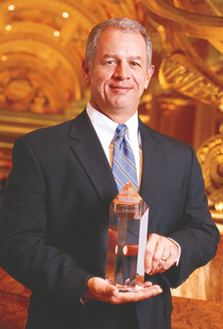
People who work for Mid-America know and understand that everyone plays a role in affecting the lives of the people that live in their homes. It’s their goal to give residents a better place to live. In an effort to do that, the employees at Mid-America make sure the products and services are as high quality as they can be, says Bolton.
For instance, the on-site staff provides gifts and welcome packages for new residents, says Melnick. “By having the opportunity to care about residents, make decisions, take chances and do the right thing, it gives us the ability to make residents happy.”
It’s also important for Mid-America to be a part of the communities in which its apartments are located, says Roberts. One of its most influential and famous programs is its Open Arms Foundation, a charity that provides free, fully-furnished apartments to families in medical crisis who are far from home.
In addition, the company pays for all utilities and stocks the pantry. Employees also can donate funds to the foundation through a voluntary deduction program.
In addition, Bolton has monthly roundtable discussions with employees selected at random, says Kevin Perkins, vice president of capital improvements and maintenance operations. During lunch, they discuss everything from property management to personal goals and expectations. The ideas are summarized in the monthly newsletter, and some are implemented in the field, says Perkins.
“I try to create a comfortable and open platform,” says Bolton, “I ask, ‘How are we doing? What can we do better? Are we doing OK?’ So, it’s really a good open discussion and it’s fun.”
All employees receive support from the top. “I don’t have a fear of going in and talking to [Bolton] about anything,” says Roberts. “He understands that other things can be important to people besides the job.”
Employees also receive support through training programs. For instance, when managers are hired they are brought to Memphis, Tenn., the company’s headquarters, to get indoctrinated in the company’s culture. Leasing associates are trained right away in marketing and leasing skills, and receive additional follow-up training. And, everyone receives training that deals with conflict and leadership skills.
“Bolton spends an enormous amount of energy training his property management staff and keeping them motivated, even though you can lose them in the industry,” says Pettigrew. “A lot of times companies are afraid to [help people grow professionally] because they don’t want them to leave, but Bolton’s philosophy is, ‘What’s better: to grow and leave or not to grow and stay?'”