

In this read-out of an executive roundtable the National Multifamily Housing Council organized with technology entrepreneur Claire Haidar, CEO and co-founder of WNDYR, four multifamily executives discuss their questions around the future of work and what lasting effect this past year might have on their corporate operations and culture.
Participants included Bell Partners senior vice president of human resources Angela Gibbons, Weidner Apartment Homes chief information officer Peter Kim, UDR chief digital officer Scott Wesson, and BH Equities president and CEO Joanna Zabriskie.
Recognizing Decision-Making Biases

Claire Haidar, CEO and co-founder, WNDYR
HAIDAR: There’s an entire spectrum of remote, blended, fully virtual, completely in-person companies. It’s not a black-and-white scale. [However], one of the things that I’m seeing very clearly emerge is that it’s assumed that blended [work environments] work. But all the data that’s coming out is that blended actually doesn’t work.
Want to Hear More?
Catch the full discussion, produced by NMHC associate vice president of content and program strategy Alison Johnson, online at nmhc.org/futureofwork. Bonus materials include a new guide to workplace models and a free assessment of your organization’s remote work readiness.
WESSON: A lot of people have this underlying assumption that we all agreed the way we were going to work previously, and we didn’t, you know? I mean, accounting didn’t work the way that legal worked, the way that operations worked. So, we really had a bunch of different cultures and operating styles already. We weren’t alike before, so why do we have to be alike now?
ZABRISKIE: People have enjoyed the ability to work from home and are not clamoring to come in, so I do feel like we’ve got to do something different going forward.
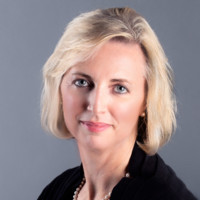
Angela Gibbons, senior vice president of human resources, Bell Partners
GIBBONS: We actually have been losing a few people as we start to bring them back into the office. They’ve gotten out and were talking to other companies that will allow them to work 100% remote. We have seen that shift where people said, “Look, I really want more flexibility.”
KIM: We’re looking for a hybrid work model, and I think the question that we’re asking ourselves is, does it really have to be the same for every department or business unit or organization within the company?
Rethinking Roles and Responsibilities
HAIDAR: There’s some very, very serious work that companies need to do here [around HR and legal policies]. You know, simple things like people can’t up and leave and go to any country that they want to go to because they may not be legally able to work there. And that becomes a liability for you, as an organization, because you have an employment responsibility.
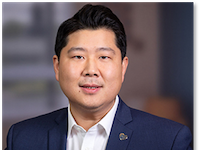
Peter Kim, chief information officer, Weidner Apartment Homes
KIM: Some of the questions that I received from some of the surveys that our company sent out are specifically about ergonomic chairs and does workers’ comp cover an employee’s home office if they’re working from home? There are just a lot of HR considerations that organizations really need to spend some time on.
GIBBONS: We also had people that were hourly. How were we going to clock in and clock out? How were we going to measure them?
WESSON: We’re rethinking roles and responsibilities. Do we think about work the same way? Do we think about how we’ve divvied up those responsibilities the same way? The customers, they don’t want to go back. If they’ve adapted to being able to talk with us digitally and engage with us digitally to get things done, to get things fixed, I don’t think they want to go back. And so, do we need to redesign some jobs to make it easier for us to be very, very responsive yet not necessarily have to be present?
Reevaluating Work-Life Balance
WESSON: One of the counterintuitive things at the beginning of the pandemic was, all the leaders, myself included, we all thought we were going to have to figure out a way to keep people working. Exactly the opposite was the problem; they were working much harder than we wanted them to.

Scott Wesson, chief digital officer, UDR
And so, we had to create some things to say, OK, if you’re leading a project, then meet with your team at 4 p.m. to tell them to stop working at the end of the meeting. We had people that were working all through the night or they were working until they put their kids to bed and then they go back. They were working much, much harder than they were when they were in the office.
ZABRISKIE: This industry, we’ve done a better job on our assets in creating that work-life balance than we have for our corporate team members.
KIM: For us, there’s a commute piece, right? I see people saving two to three hours a day just from getting ready and fighting traffic, trying to get into work. And, you know, we feel kind of like we’re in limbo mode, right? We haven’t finalized a permanent strategy in terms of what this remote work looks like. I think we have a lot of employees that are waiting to decide, do we relocate permanently?
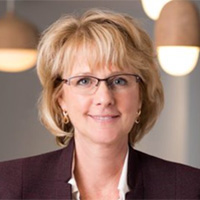
Joanna Zabriskie, CEO, BH Management Services
There’s just a lot of unknowns and the social interaction, the community that’s missing for, you know, people who may be single, new hires right out of college. Those are the kind of the areas that I am obviously worried about.
HAIDAR: The [questions we’re asking today] shouldn’t be, do you want to work in an office or not? The questions we should be asking are: What helps you to transition between work and home? What helps you to connect to people? What helps you to socialize? What does a social interaction look like that has meaning?
ZABRISKIE: We’ve hired people that we never would have hired previously. We’ve hired a couple of senior team director and VP level people that are out of our markets and nowhere near corporate offices. And they’re building teams and integrating within the fabric of our company pretty seamlessly.
HAIDAR: You’re able to do that because you’re starting to hire according to your company culture and not location, and that is significant.
