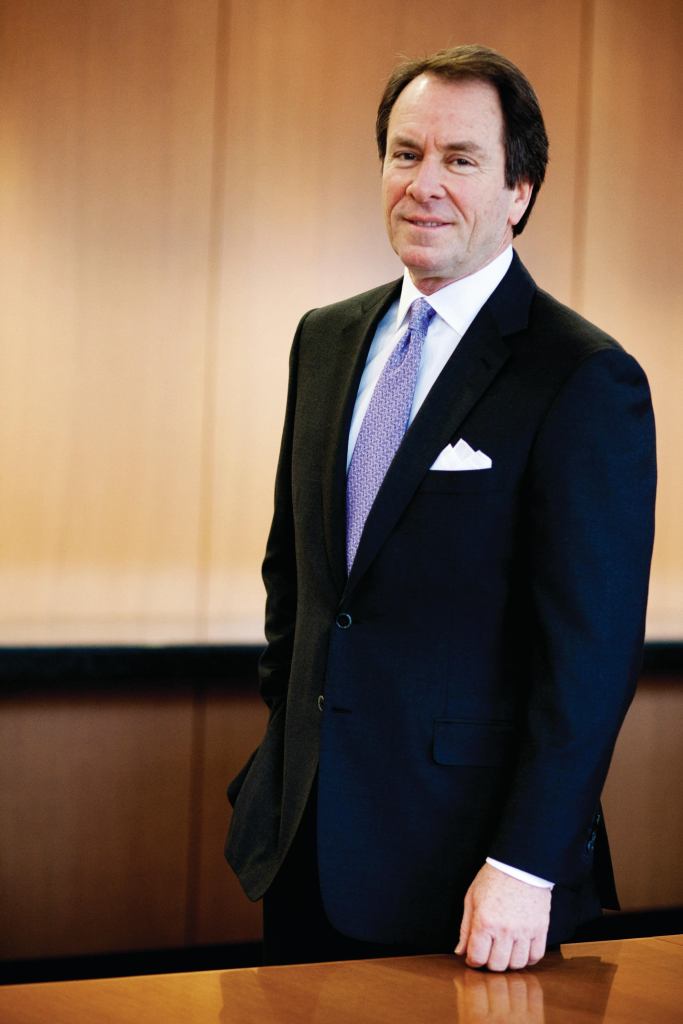
Still, in some respects, the company’s markets and size take a back seat to concerns about Friedman himself. Under Green Street’s all-encompassing “corporate governance” score, AEC trails only Essex Property Trust in Palo Alto, Calif.
There is a litany of reasons for this score. Friedman owns a stake in the company’s headquarters building, and there are a lot of insiders on its board. And Friedman has business relationships with his two sons, working with Matthew, a broker with Marcus & Millichap, to sell deals. And, just last summer, he bought out his son Jason’s construction company, JAS Construction, and made him head of construction.
AEC says JAS was successful in both the substantial renovation of occupied and unoccupied apartment units, as well as ground-up construction, but analysts harbor some questions. “All of these things can make certain investors uncomfortable,” McCulloch says. “From a public investment standpoint, you want these guys to be pretty squeaky clean if they can be from any conflicts of interest.”
Friedman says if his sons couldn’t perform, there would be no professional relationships with them. “We’re under more scrutiny because as a public company we have more people watching,” he says. “That raises the bar. If we have someone not pulling their weight, whether it’s a relative or not, it’s obvious—particularly when it’s a relative of the CEO. The bar for my son is probably higher than it is for anybody else coming into the organization.”
Tried and True
Shying away from revenue management, Associated Estates focuses on property management the old-fashioned way.
Cleveland-based Associated Estates Realty Corp.’s (AEC) submarkets aren’t the only thing fueling its surprisingly solid Midwestern story. Its people play a big role as well. “We give our managers the authority to make decisions and to make every resident interaction meaningful,” says John T. Shannon, senior vice president of operations for AEC. “They have the ability to make decisions on the spot.”
The empowerment philosophy is driven in large part by AEC’s choice not to rely on revenue management software—a staple in the leasing offices of its REIT competitors. “We’re not using canned systems,” Shannon says. “We have our own system and reports that we developed. Every single morning, our property managers, our regional managers, and the vice presidents know the unit availability and what the pricing is. We’re small enough that we’re able to do that every day.”
Despite not having sophisticated systems, AEC has been able to keep its occupancies in the 92 percent to 94 percent range across its predominately Class B and B-plus apartments which today average about 14-years-old—younger than many of its peers. The only exceptions to this youthful portfolio are a handful of properties in the Atlanta area.
Still, even though it has no plans to add high-dollar software systems, AEC wants to make technology a focus in 2010 through its social networking outreach with Gen Yers. The firm says that 55 percent of its “first touch” with customers is through the Web. Though social networking in particular isn’t driving that traffic, it’s still viewed as an important tool.
“We do engage in social media,” says Kim Kanary, director of corporate communications for AEC. “It doesn’t drive traffic, but it contributes to the community.”
AEC plans to continue its focus on managing costs and mitigating expenses this year, as well. Shannon says the organization has been looking at efficiencies in its overtime pay and manpower, as well as utility costs, tax assessments, and vendor relationships.
“We’ve had the luxury of being in markets where we have concentration to bundle our services to one trash vendor or landscaper,” Shannon says. “The budget process allows us to benchmark against ourselves. We know exactly what we should be paying on a per-unit basis for landscaping or cleanings.”
There’s also the salary issue. Friedman got paid $2.4 million last year. If you look at pay-per-market capitalization, that’s higher than the CEOs of larger REITs in the apartment sector. AEC says the reason for the wage is that a significant portion of its executive compensation package is paid in stock. Since its shareholder returns have been high three of the past five years, so has its executive compensation.
The Prognosis
Despite the questions about AEC’s future and some fairly sensitive criticisms about his leadership abilities, Friedman doesn’t run from these perceptions. But unlike in the early 2000s, AEC is more aggressive about getting its side of the story out.
“We used to be much more reactive with the media,” says Kim Kanary, director of corporate communications for AEC. “We’ve definitely become much more proactive. We feel that we have a good story, and we are much more open to telling people about our story.”
Friedman’s formula for corporate success uses that same type of discipline with investors and analysts. He has worked hard to follow through on his promises to investors, hoping to one day get his investment-grade rating back. “Ratings aren’t just about covenants,” Friedman says. “Ratings are also about confidence and delivering what you say you will deliver. When we say we will reduce our Midwestern exposure and when we say we’ll get rid of lower-margined assets and we do, that helps because it’s part of a bigger picture that potential investors and ratings agencies look at.”
AEC has also shown it’s serious about reducing leverage—a surefire way to charm any analyst. In addition to improving its property shares, it completed an offering of 4.5 million shares in January, which generated $54.7 million after costs and will help the firm possibly add more assets in 2010. The move also helped lower AEC’s leverage levels from debt to the non-depreciated book value of 50 percent (down from 55.9 percent). Right now, it has 18 unencumbered assets with a total value of $250 million.
“They’ve been chipping away slowly but surely and getting the debt levels down,” Acheson says of the progress AEC has made in the past few years. “The recent equity offering helps.”
The approval from analysts such as Acheson, Poskon, and even McCulloch (his firm was a major critic in 2004) proves one thing: Friedman has made great strides in the right direction, despite these tough times. “The company hasn’t really had any major missteps over the last couple of years,” McCulloch says.
But the real proof for Friedman came in November: Forbes once again wrote about Associated Estates, but this time, the REIT was … a buy. Let’s just say Friedman has a new article gracing his desk.