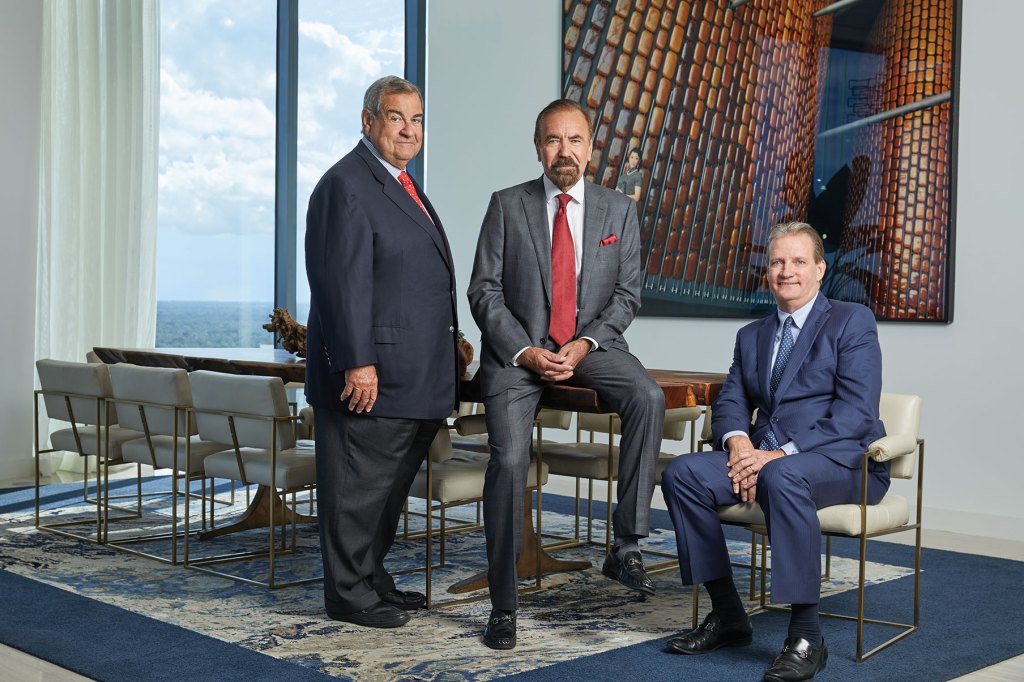
Jorge Pérez doesn’t just build apartments.
The longtime Miami developer, former urban land planner, and art and architecture admirer describes himself as an urbanist, committed to building lively, inclusive, dynamic cities. His vision is larger than an apartment building or a condominium unit and is shaped around a passion and drive to design best-in-class housing projects that operate in synergy with their surroundings.
The Related Group
Location: Miami
Date founded: 1979
Estimated 2018 gross revenue: $1.65 billion
Number of units built: 89,000 completed and/or started in current cycle (2010–2018)
Number of employees: 312
“That’s one of the things Related Group prides itself on, one of the things that’s a differentiator for us in the way we build apartments—our civic intent,” says Pérez, chairman and CEO of Miami-based Related Group, which he founded in 1979. “We pay significant attention to the design context of our cities as we build.”
Through the company’s 40-year history as a key multifamily housing stakeholder and powerful influencer in the Florida market’s evolution, Related Group executives have seen it all. Its post-crash years have been marked by loss, transitions, lessons learned, and a reorganization that shaped the company into what it is today—a relevant, revamped firm with a balanced portfolio of properties that’s now expanding into new markets and, most recently, launching a $2 billion value-add venture focused on overhauling outdated properties in an effort to make housing more affordable for the average renter in its key markets.
With Pérez at the helm, the company’s five primary divisions—market-rate development, affordable housing, condominium construction, international building, and the new value-add arm—function almost as independent companies within their core building sector but still operate as one group with a passion for, and commitment to, developing quality housing for every type of renter in the country.
Recession Revamp
In the 2000s, Pérez was focused on condominium development in Florida and Las Vegas, betting big on the booming multifamily for-sale market. It was so profitable, in fact, that Pérez pretty much stopped building anything else. While the focus on one product type led Related Group to be successful in the heyday of a thriving economy, the strategy didn’t stick when the market started to turn, and in a flash, Related went from closing all of its units to closing none.
“I had all my eggs in the condo basket,” Pérez recalls.
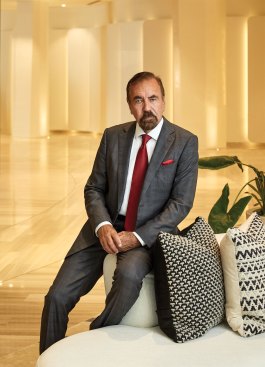
Photo by Jeffery Salter
Jorge Pérez, chairman and CEO of Related Group.
Like most multifamily developers, Related was hit hard by the Great Recession, especially given the fact that the markets where it was building took a heavy beating during the downturn.
“The biggest lesson we learned is humility,” says Pérez. “For three decades, your company grows without ever having an unprofitable year or a project that goes bad. But we rapidly learned that the market is bigger than us.”
Pérez’s breadth of experience—he started out as an affordable housing developer—plus an immediate need to keep the company from meeting the same end as many development firms during the crash, set in motion a strategy that would define how Related Group is structured today. After Related presented a transparent exit strategy to over 50 lenders and banks that had money riding on its success, the banks stood behind the company, and Related quickly began cutting losses, rapidly selling off inventory that was losing money and exiting the hard-hit Las Vegas market completely.
Other companies at the time were doing the same, and Pérez saw an opportunity to purchase land and properties at bottomed-out prices, knowing that “this hard economic time would pass, and better ones would come,” he says.
It was the company’s first dabble into rehab acquisitions, a strategic move that provided profit from turned units and kept the company afloat through the recession, putting the firm in a strong position to start building once the market stabilized. While it then turned its attention to other spheres of the housing market, the company continued to work on acquisition projects as they became available over the next several years.
Today, Related’s new value-add division will focus entirely on project renovations.
Market-Rate Rentals
In the wake of the downturn, Pérez began to restructure Related to be the multifaceted firm it is today, involved in all aspects of the multifamily housing market. In 2010, he oversaw the company’s switch to market-rate apartments, starting with smaller, simple “middle-class” homes, then slowly moving from mid-rise developments to high-density, mixed-use, high-rise urban product.
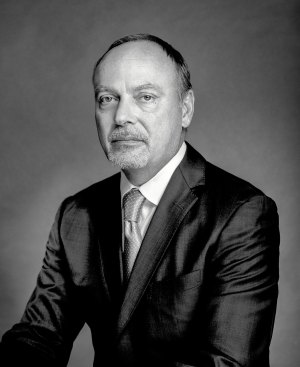
Steve Patterson, president and CEO of Related Development.
To head up the new market-rate rental division, Pérez tapped industry veteran and former Orlando, Fla.–based ZOM executive Steve Patterson. Patterson laughs about how the two developers operated as “friendly adversaries” in the business, competing for the same Florida sites for years.
“I always had a lot of respect for Jorge, and when he sat me down to talk about coming to Miami, he completely sold me,” says Patterson.
Patterson acts as president and CEO of Related Development, the firm’s market-rate rental and mixed-use development division. Eight years after its creation, Related Development is set to break ground on what will be its 10,000th unit—back in Las Vegas, to boot—a milestone for Patterson, who in the beginning operated as a team that included only one employee—himself.
Something for Everyone
To cater to its variety of residents, Related builds three types of market-rate rentals, all tailored to a certain demographic.
With Icon, Related’s highest tier of product, the firm targets the “renter by choice.” Many of these consumers are over the age of 45, but Related’s high-rise luxury communities still see many renters in their 20s with high-paying jobs. These affluent residents earn salaries above six figures and are looking to live in walkable, downtown urban hot spots.
Rents for Icon properties range from $2,300 to $3,500 and more. The company has completed two Icon projects, with three more on the boards.
On the other end of the spectrum, Town is the company’s most affordable market-rate option, where rents range from $1,400 to $2,100.
“It’s not traditional workforce housing by definition, but it’s geared toward a younger group of renters in the 25-to-35 age bracket,” says Steve Patterson, president and CEO of Related Development.
Town communities are low-density, garden-style projects located in suburban areas. Related has built three Town properties in Florida and has five more coming to market in the next few years.
Renters in their late 30s who fall somewhere in the middle will probably find themselves in one of Related’s Manor products, where rent prices range from $1,600 to $2,500 and above.
“There’s a huge difference in people’s wage-earning capacity at this age, so they can afford to pay a bit more,” Patterson says of this customer base.
These mid-rise communities are located in what Patterson calls “uptown locations”—not right in the heart of the city, but only a five- to 10-minute drive away. Related will add another Manor property to its existing four in early 2019.
“We’ve had a steady and controlled growth pattern, and we have about 3,000 units in the pipeline today across all of our markets,” he says. “Of course, we could have grown faster, but one of the most important things to us as a company is to preserve the integrity of our products, because we really want to redefine what it means to be a renter by choice by providing desirable places to live.”
Under Patterson, Related Development has transformed the Florida rental market with its standout luxury, Class A market-rate projects, including the 2.6-million-square-foot, mixed-use CityPlace Doral in the Miami metro; Tampa’s 21-story Icon Harbour Island Apartments and visually striking, glass-cube Parker Street Apartments on the waterfront; and the upscale, hotel-style New River Yacht Club in downtown Fort Lauderdale.
Patterson’s enjoying the latest wave of demand for Related’s apartment products.
“The demand right now is just incredible. Honestly, it’s probably better than it’s been at any other time in my career—and I’ve been through more cycles than I care to admit,” he jokes.
As they look to markets across the U.S., Patterson and team are bullish on Atlanta, as well. Florida has always been Related’s “Steady Eddie,” as Patterson calls it, but he notes that most major Florida cities are starting to experience barriers to entry as rent prices continue to increase. Meanwhile, Atlanta seems ripe with new opportunities.
“We were attracted not only to Atlanta’s magnitude of job growth, but also by the type of job growth the city is seeing,” Patterson says. “Atlanta is quickly expanding its science, technology, engineering, and math jobs, and those jobs are forecasted to grow at a faster rate than the national average job growth.”

Photos courtesy of Related Group
Icon Midtown is the company’s first project in Atlanta. The 39-story building offers luxury amenities, such as a rooftop clubhouse, wellness center, theater, bar, fitness club, yoga studio, and more.
In April, Related opened its first project in Georgia, a 39-story tower in Atlanta dubbed the Icon Midtown. The Class A, luxury, mixed-use property brings 390 units to a walkable downtown area and will feature one of the nation’s largest Whole Foods stores. The company also broke ground on the Icon Buckhead last year, another luxury project just a few miles away.
The division is also heading West. The company opened an office in Dallas earlier this year to oversee its expansion in the Southwest, which has started with groundbreakings in Phoenix and Las Vegas, two markets that marry the best of job growth and affordability for developers and residents.
“With our market-rate rentals, it’s all about this mix of job creation and the number of units already being built, then finding the markets that are underserved,” says Matthew J. Allen, executive vice president and COO at Related. “Right now, we think Phoenix, Scottsdale, and Las Vegas pose the most opportunity for us because there’s a lot of demand but not a lot of construction activity.”

Photos courtesy of Related Group
Icon Midtown offers luxury amenities such as an 11th-floor pool terrace with alfresco dining space.
Value-Add Venture
New markets aren’t the only areas where Related Group is finding opportunities for growth. The firm launched its new value-add venture in June, entering into a $2 billion partnership with Boston-based investment company Rockpoint Group. Backed with Rockpoint’s capital, Related is acquiring properties in its home state of Florida as well as Atlanta, where it had already expanded in recent years. The division is currently preparing to close on its first round of deals.
Challenges Ahead
Related’s commitment to developing more affordable housing options comes at perhaps one of the most challenging economic times of this cycle.
At the start of 2018, the Trump administration announced it would impose hefty tariffs on imports of steel and aluminum (25% and 10%, respectively), as well as 20% on lumber, a move that had immediate implications for the construction industry. The ongoing trade war is top of mind for developers as they encounter mounting supply-side hurdles, price volatility, and uncertainty.
The long-term impact on multifamily housing is still up in the air, but Related has already felt the pressure of increased material costs over the past few months.
“In this cycle alone, we’ve already realized a 50% increase in construction costs. If we experience another 10% to 15% from the tariffs, I expect it will have a significant impact on our production, maybe even cutting new starts by more than half,” says Related Development’s Steve Patterson. “We can deal with increases in cost when they’re slow and steady over time, but these price spikes are a big concern on the short-term horizon for us.”
Related COO Matthew J. Allen and vice chairman Adolfo Henriques, who oversees much of the company’s operations, recognize the unavoidable reality that as the cost of a project goes up on their end, so, too, will the price consumers have to pay for a residence. Unfortunately, the new expectation could price many of today’s renters, even loyal Related residents, out of the market.
“At the end of the day, [the cost increases] might just mean that some of our projects are no longer feasible,” Allen says.
Still, Related is working around the obstacle and finding ways to combat the waning affordability of building multifamily rental units. For example, to keep costs contained, the firm immediately buys out its trade subcontractors once it has a job on the boards, to lock in prices in case of fluctuation.
“We do definitely expect that costs will rise, so we’re forecasting our budget estimates with that in mind and building the increases into our models as we underwrite,” Allen explains. “We’re adding many more contingencies beforehand.”
While the rehab model isn’t new for the company, the firm previously had only ever done rehab projects when the opportunity presented itself.
“There’s been so much concentration lately on new development, and so we only recently looked into the value-add business and the idea of actively pursuing acquisitions for rehabilitation in a programmatic, systematic way instead of doing them as one-off projects,” says Related veteran Michael Hammon, who is returning to the company to head up the venture alongside Allen.
While Related Group builds market-rate and luxury projects, it’s also committed to focusing on making the overall housing market more affordable—a vision the value-add endeavor helps advance.
“We’re seeing the market become more and more expensive, especially with our luxury rentals in dense urban cities. The rent prices are prohibitive for a lot of people,” says Pérez. But renters are still looking for the lifestyle found at a Class A property, even if they can’t afford it.
“There are many older properties out there that are much less expensive, but because they’re outdated and may have older appliances or finishes, for example, people don’t want to live in them,” says Pérez. “We see a lot of value in the idea of taking some of these B and C projects and transforming them to be as close to a luxury product as we can. It doesn’t entail too much on our end, but it provides a desirable housing option for renters at a reduced rent.”
Pérez wants to build what he calls “24-hour cities”—downtown, walkable, mixed-use areas with a live/work/play lifestyle for renters.
“But we want them to be 24-hour cities for everyone, not just the rich,” he says. “People like teachers or police officers are priced out of the cities they work in, and so in addition to building our luxury products, we have to try to continue to provide more affordable options for the working class.”
Future Plans
Bold, but focused and honed, goals are defining Related Group’s vision for the years ahead. On the market-rate rental side, Patterson has an ambitious plan to start 5,000 new units in 2020.
Beyond the numbers, the team leading Related is learning how to better understand its customers across all of the company’s different divisions and housing types.
“It’s really important for us to successfully identify the trends in the market, and the renter preferences, going forward so that we can really deliver what our clients want in a home,” says Related Group vice chairman Adolfo Henriques.
Across its divisions, the firm has been increasing its resident surveys and spending more time learning about who its residents are—their ages, their careers, their lifestyles, their preferred amenities, and their tastes in design and style.
The demand for multifamily right now is just incredible. Honestly, it’s probably better than it’s been at any other time in my career.
-Steve Patterson
“We want to make sure we’re hitting the sweet spot and making ourselves attractive to all of our prospects,” Patterson says.
Always looking forward, Pérez says his favorite project is his “next one.”
“I don’t sit and look back at past achievements as much as I try to concentrate on the future,” he says. “I’m always asking myself, what can [Related] do to make our next development better than anything else we’ve done so it’s our best project yet?”