
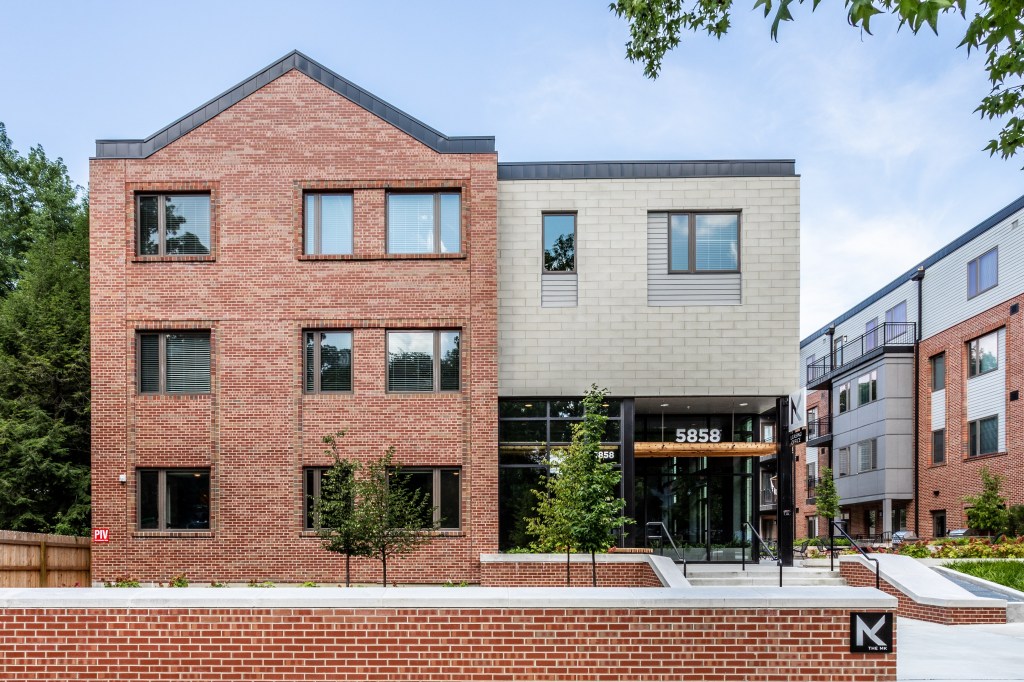
Trying to make multifamily projects pencil in slightly unconventional locations is leading some developers to experiment with a secret sauce of amenities, parking, walkability, and rent rates. Milhaus, founded in 2010 and based in Indianapolis, is trying to carve out a niche for “urb-suburb” multifamily communities. So far they’ve been focusing their sights on projects in second-tier cities including Cincinnati, Indianapolis, Memphis, and Milwaukee. To find out what the firm is doing, we posed some questions to John McGurk, vice president of development.
MFE: What is an urb-suburb, and how does it differ from a typical multifamily community?
McGurk: Urb-suburbs are communities surrounding a metropolitan area that provide desirable downtown amenities such as walkability, shopping, and restaurants. While urb-suburbs can appeal to a multifamily household, traditionally a suburban multifamily community may boast more living, storage, and parking space, traditional green space, and disconnect from urban amenities.
Individuals moving into urb-suburb communities are coming from urban areas, still looking for the walkability and desirable amenities of downtowns, while rural homeowners are looking to be more connected with easier access to their needs and wants. Also, individuals from more typical suburban multifamily properties who want more urban amenities but also don’t want the more 24/7 aspects of urban centers.
MFE: Why do you think the concept has cross-generational appeal?
McGurk: According to the Pew Research Center, suburbs have been growing more rapidly than rural or urban areas in the past few years. Baby boomers are downsizing, millennials are settling in with families, and everyone is looking for convenient—and conveniently priced—neighborhoods to call home.
With so many generations under one roof, urb-suburbs can provide an array of unique amenities for all members of a household, from socializing opportunities of just-married millennials or empty-nester boomers to desirable school districts for new parents and their children.

John McGurk, Milhaus
These also serve as transitional housing for generations going in different directions. Empty nesters who want more urban, but not too much, and younger people wanting to slow down a bit but not own a track home in the suburbs.
MFE: How do you identify and find desirable locations for new projects?
McGurk: Not all suburbs have downtowns. In fact, you typically only find them in established suburbs that operated as independent cities before sprawl swallowed them. You must also find communities that have tried to preserve this older community rather than ignore it or destroy it.
MFE: What is the biggest challenge in developing them?
McGurk: The dynamic of the urb-suburb is an interesting concept for developers as they work to create a sense of creative urban living in a traditional suburban space. One such challenge is the perception from surrounding neighbors. Suburban residents may be wary of developers reinventing the area and changing the aspects of what makes their neighborhood unique and decidedly not urban. However, with understanding and input from surrounding business owners and community members, developers can create a living space suitable for the neighborhood.
Another challenge with urb-suburb developments is the financial aspect. It can be tricky to create the impressive, high-end amenities expected from an urban product with a lower suburban price tag. Developers must be especially creative with these developments and use unconventional ways to keep costs down.
Finally, a very real issue in urb-suburb properties is parking. Residents of urban properties may not always own a car, but urb-suburb properties must account for individual families owning one or two vehicles.
MFE: Do you think the effects of the pandemic will increase migration to second-tier cities? Why or why not?
McGurk: Absolutely. All indicators have stated that less dense cities are poised to thrive as density is one of the major factors in virus transmittal. Add on to that the continued affordability issues of larger areas’ lack of wage growth will only further fuel second-tier population growth.
MFE: What are some ways for multifamily owner-operators to reduce expenses and open ancillary revenue streams?
McGurk: Continued energy efficiency is one main way to reduce expenses as utility costs, along with personnel, are generally one of the greatest expense line items. Additionally, rev share internet/TV packages offer meaningful rev generation and will be all the more important as more and more people work remote and from home.
MFE: How has your company adapted to the virus in terms of maintaining business as usual in unusual times?
McGurk: Migration to digital leasing has accelerated at a rate no one could have foreseen. Finessing how to best show units/amenities to prospects in a meaningful/realistic way has been our biggest advantage during this pandemic.