
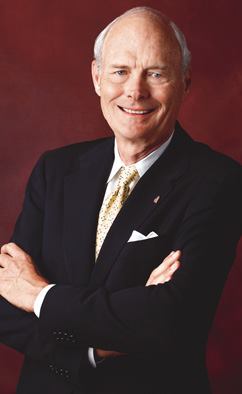
Lessons Learned And while Butcher is a firm believer that the best lessons learned are from the mistakes made, both he and Henry joke that, unfortunately, their memories can be short-lived. “I think you learn most from your failures,” he says. “You don’t learn very much when times are good ? and you make a lot of money on a project. If anything, you probably think you’re better than you really are. The times we’re going through right now are probably the most beneficial times of our company, because we truly learn. Some of us have to learn two or three times, like [Henry] and myself. And some of the younger people are learning for the first time.”
For instance, large land deals can be more trouble than they are worth, says Henry. As a general rule, large land deals are something the company wants to avoid. “We’ve done large phase land deals throughout the years,” says Henry. “And as I say, our memories are short, because when you get over the pain of one deal, about five or six years later another one [comes along] and we get involved.”
Not only are large deals hard to finance, but they are always more expensive than originally planned and always take longer to develop, he says. Although the company wants to avoid these types of deals – because they can be a headache and cause tremendous amounts of aggravation – Legacy currently is working on two such deals – Ambassador College in Pasadena, Calif., and RiverPark in Redmond, Wash.
Projects Even though Legacy Residential’s parent company, Legacy Partners, has a commercial division, Legacy has not done a lot of mixed-use projects.
Earlier this year, the company attempted a project in downtown Seattle with eight floors dedicated to commercial space and 12 floors for residential. But, the office market had deteriorated, the economics no longer worked and the company had to scrap the project.
It has only been within the last few years that the company really started focusing on developing mixed-use projects with retail space. Prior to that, the company developed garden-style projects in the suburbs – which did not lend itself to a mixed-use format. Legacy is currently in the middle of developing a project at 23rd and Madison in Seattle that will have 250 units and a 40,000-square-foot Safeway supermarket and other retail stores.
With all new urban locations, Legacy tries to look for retail that complements the neighborhood, and that acts as an amenity to its residents. Starbucks is a retail tenant of choice because of its popularity with residents, says Henry.
While Legacy is relatively young, it’s known for its class A developments in prime locations, such as The Legacy at Westwood, a luxury rental community set on 1.87 acres on Wilshire Boulevard in Westwood, Calif. The property consists of 187 units in two six-story buildings over a common three-story subterranean parking garage.
Legacy typically is building high-density concrete product over parking. It has incorporated the wrap around parking garage, in which the garage is hidden and residents park on the same level as their unit.
Popular amenities found at most of Legacy’s properties include spacious floor plans with storage, upgraded appliances, controlled access garage parking, and business and fitness centers. When appropriate, properties have a pool, spa, library and videoconference room.
In June, Legacy completed The Landing at Jack London Square, a multifamily development on the waterfront in Oakland, Calif. “It’s very successful,” says Connor, of Cornerstone, which invested in the project. “The community was brought in on time, on budget and leased ahead of schedule.”
When Legacy acquired the option to purchase the site, it initially received approval to get it rezoned from a commercial site to a multifamily site. A group of individuals then sued the city to try to prevent the rezoning. The issue was tied up in court for a couple of years, but Legacy had the “perseverance and commitment to see the project through. The company recognized that it was a great site,” says Connor. “A lot of developers would have moved on.”
Connor repeatedly invests with Legacy because the company has the ability to select very strong sites for development. In addition, he likes the fact that Legacy “treats financial institutions as partners as opposed to lenders,” he says. “Often, outside capital is considered a passive investor. But Preston and his partners treat the financial side as equal partners. The decision process is really a joint process.”
Legacy has an ambitious year planned for 2002. By the end of the year, the company will complete construction on several projects including The Plaza at the Arboretum in Santa Monica, Calif.; Legacy on Camelback in Phoenix; The Ballpark Lofts in Denver; The Olympus in Seattle; and Legacy at Museum Park In San Jose, Calif; totaling more than 1,000 units. In addition, the company will start construction on another 1,068 units.
As for the future, “We’re going to continue to do what we do best,” says Henry. “We may tweak it a little bit along the way, and the size of our company might change a little bit, but the formula that we use has worked well for 30 years and it’s not going to change much.”