
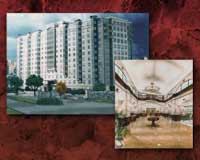
AEC Cares, a corporate model for community involvement, promotes quality of life in its communities by involving employees and residents in local charity activities.
The company focuses on three areas: corporate-wide support of select national nonprofit organizations, volunteerism and support of local community nonprofits by employees, and participation by management on the boards of nonprofits. During the past year, at least 50 percent of its communities and regional offices participated in at least one community activity. Organizations which have benefited include AIDSRide, American Cancer Society, American Red Cross, Mothers Against Drunk Driving, and the United Way.
Each year, this award is presented to the company that has increased its efficiency, profitability, and effectiveness through technology, or that has provided technological or e-commerce opportunities to its residents. Through RentWizard, AMLI has adapted a yield-management system and has raised the bar of technology’s best practices in the multifamily housing industry.
In addition to using optimum pricing in the sales situation, the other key advantage that comes from RentWizard is that as part of the business process, pricing decisions are removed from the leasing staff. Once the leasing agents don’t have to worry about pricing the units, they can focus on selling the benefits of the property.
While much of the land along the New Jersey Hudson River shoreline had already been transformed into housing, a 10-acre slice of land in North Bergen, N.J., jutting into the river across from Manhattan‘s West 70s, had long sat dormant. Barrett Builders converted the former unused waterfront, which was designated a brownfield, into Half Moon Harbour.
The property offers 176 luxury units ranging from 740 square feet to 1,536 square feet and features European-designed kitchen cabinets, washer/dryers, high-tech wiring, and ceramic tiling in the kitchens and baths. Initially, a limited number of apartments were reserved for three-month leases for New Yorkers displaced by the events of Sept. 11.
To address the brownfield situation, the winner worked with the New Jersey Department of Environmental Protection. In addition, the development plan initially met opposition from neighboring residents, fearful of losing their scenic skyline.
In a compromise, the architect angled the 12-story structure to minimize any obstruction of views for nearby homes and businesses.
While most of the residential and business neighbors of the proposed development – The Commons at Grant – supported the effort, vocal opposition arose in the form of an elite, upper-income, historic community located just outside the downtown boundaries of the project. The ensuing public battle divided Columbus, and eventually involved the local media and city government. The crux of the issue was a complicated funding package that included millions in public money. National Church Residences showed great use of grassroots efforts to overcome the not-in-my-back-yard (NIMBY) sentiment. The decision was left to the Columbus City Council, which finally voted in favor of the development.