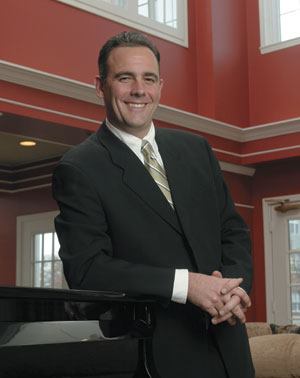
To fulfill these ratios, Quay brought in higher caliber employees who were more customer-service driven and gave them proper training and mentorship. Enticing these people, almost exclusively college graduates, was not easy. Quay raised pay levels about 10 percent and started a manager-in-training (MIT) program. He sent recruiters to college employment fairs, mainly to schools with hotel and finance programs.
When new hires start at Village Green, they all wear the same name tag that says, “I’m a little green.” But MITs won’t be green for long. They immediately begin a program where they learn about the basics of operating a property, including budgets, preventative maintenance, procurement, and service requests.
Quay also brings them as a group in each month to meet with him for four hours. The discussions focus on broader company issues, such as operating statements, initiatives, and site level needs. After six to nine months of this training, trainees get to manage a property. If they are not ready, they are let go.
A New Criteria Recruiting and training new people is only part of the battle for Quay and his team. They also have to evaluate their current employees.
Quay worked hard to take all subjectivity out of the performance measures, grading them on the service benchmarks he set. The three criteria used are leadership, financial performance, and customer service. Employees are grouped against their peers on a career board, which provides a structured way to award employee achievement and track performance, says Kim Brown, vice president of human resources at Village Green.
Before he arrived many managers would give large raises to employees inconsistent with their performance, Quay says. Now, the career board and the market dictate who gets a raise and how much it is. Those in the top 20 percent on the career board get a set raise, while those in the next 60 percent get a lower raise.
Those employees in the bottom 20 percent do not receive a raise, but are given action plans to improve their performance. If they don’t improve, they, too, are let go.
According to Quay, employees who participate in the University of Village Green program, which began under Schwartz and Holtzman, usually score better on the career board. The university offers classes across a number of multifamily core disciplines, from collecting rent to proper landscaping to sales techniques.
Every employee has to take mandatory courses within their discipline to be promoted. Quay built upon what his predecessors started by adding more classes and implementing teleconferencing, which means that executives don’t have to fly to regional offices to teach courses.
While costly and time consuming to implement, the recruitment and training programs are becoming revenue generators, he adds. The company recently went on an aggressive marketing campaign, telling Midwest owners it had revamped its customer service and employee training. Northwestern Mutual, in Chicago, received the marketing collaterals and recently chose Village Green to manage a 198-unit property in Cincinnati. “I was very impressed with their training procedures,” says Barbara Young, asset manager for Northwestern Mutual.
“I like the fact that they developed a plan for bringing people in, developing them, and continuing their education and experience so that they can become managers,” Young continues.