
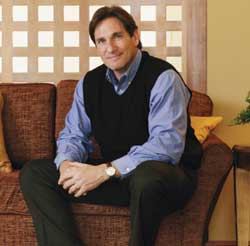
Grust developed that first quality early in his career, when he joined a superintendent training program with Kaufman and Broad (now KB Home) in Chicago. Intended as a stopoff before law school, the entry-level job quickly developed into much more for Grust, who soon found himself managing production for the entire division.
From there, he moved to The Christiana Companies in 1980, where he managed both the development and operations of a 1,062-acre retirement community in South Carolina. It was Grust’s first introduction to the challenges of senior housing operations. “It was startling to me” how difficult it was to find a management company for the property, he says.
The experience gave Grust a “reverence for the complexity” of the senior housing business, which many in the sector say is really a combination of three industries: real estate, hospitality, and health care. “And it doesn’t fit neatly into any one of those categories,” Schless says. “Senior housing is a challenging business, because it requires a tremendous amount of operational expertise.”
But it also intrigued Grust. In 1988, he and Martin Fenton, a former Christiana colleague, founded Senior Resource Group, ready to test their vision (and business model) for senior housing. They purchased a 105-unit retirement complex in Solana Beach, reconfiguring and repositioning the property with a new name: La Vida Del Mar. The property’s first executive director? Grust himself.
“I wanted to sit across the desk from an 83-year-old man and understand his issues and fears. I wanted to understand what it was like to clean apartments on a weekly basis, to run a 12-hour restaurant,” Grust says. “I discovered it was a tough business. The audience is never ready—it’s a traumatic event for them emotionally and physically.”
He was hooked. “We can be incredibly creative, because people don’t exactly know what they want,” Grust says. “The bar had been set pretty low.”
Determined Developers That’s not the case at SRG, where executives have the same (high) expectations for a property’s design as they do for its social activities and resident care.
Just before the holidays, floor plans sit on Grust’s desk waiting for his review. In the corner of his modern office, an open-cubbyhole cabinet holds rolled-up architectural plans. Poster boards throughout the SRG office give three-dimensional previews of new properties, thanks to fabric swatches, wood samples, room renderings, and furniture sketches.
It illustrates just how differently SRG, whose portfolio of real estate assets is worth $600 million based on the income it generates, approaches its properties. “Many developers and operators of senior housing came out of the health care side versus home building and development,” Gollis says. “What’s different is that SRG is coming at it from the real estate side and community development.”
That translates into independent and assisted living properties with larger apartments, locations woven into the community, and a willingness to stick with a difficult piece of dirt.