
Getting in Shape
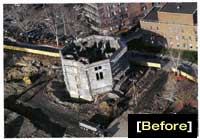
When Becker visited the property’s remains back in 1997, he immediately knew that housing would be a natural fit for the site. “There’s such a shortage of housing in New York at all different income levels, and Roosevelt Island is an ideal location for housing,” he says. “You get all the benefits of suburban living with the parks, tennis courts, pools, and bike paths, yet you are one [train] stop from Bloomingdale’s.”
Despite this pent-up housing demand, getting the project off the ground proved to be immensely time-consuming–but Becker was up for the challenge. “Bruce is persistent,” says Judith Berdy, president of the Roosevelt Island Historical Society. “A lot of people have inquired about the site, and once they start dealing with the bureaucracy here, they just throw up their hands and say forget it, it’s not worth the aggravation.”
The biggest design setback: Becker crafted a plan with the state historic preservation office (more than a year of work) only to have it rejected by the National Park Service, which gives the final stamp of approval for historic rehabs. “We had to do an 11th-hour redesign,” recalls Becker. “We worked around the clock, and within 45 days of the original denial we had a new approved plan.”
To complicate matters even further, the project had to be approved by three different administrations of the Roosevelt Island Operating Corp. (which manages, develops, and operates the island) since the leadership changed over the years of the project’s planning.