
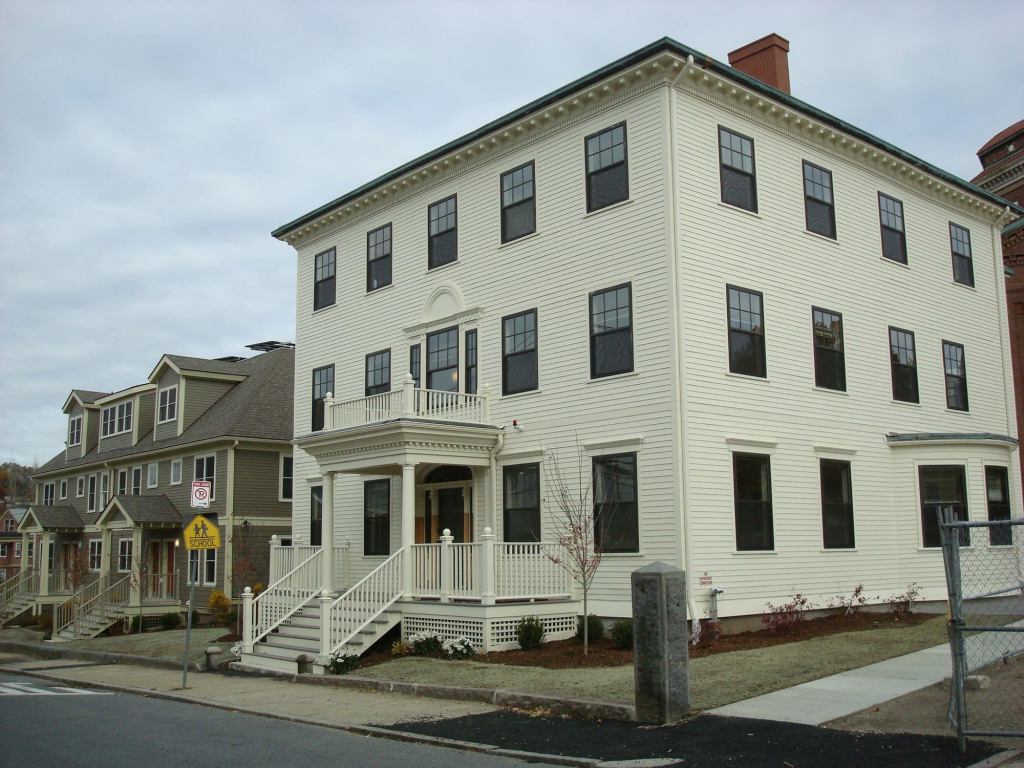
After much negotiation, New Atlantic Development and JPNDC received approval from the city and the state to shift gears and start with the for-sale component of the development, Creighton Commons. “The state stopped funding new affordable homeownership projects. We had to really talk them into this,” Hardy says. The community features six units built in the former rectory and an additional 10 units in a neighboring, newly-constructed building. The developers initially had planned to tear down the rectory—what they describe as the least impressive building on the campus, void of any original detailing—but the Boston Landmarks Commission intervened. The rectory building, though, was moved from the corner of Creighton and Centre streets further down Creighton to make room for a mixed-use development that ideally will bring a higher level of energy to the front of the campus.
The interior of the rectory was gutted, redesigned by Allston, Mass.-based Elton + Hampton Architects to include three long units stacked on either side of the building. The building was structurally sound, but the exterior façade, originally wood clavered but subsequently vinyled over, had to be replaced. The developers chose HardiePlank as a durable, cost-effective replacement. On the inside of the rectory and the neighboring new building, the developers convinced the city to allow them to apply higher-end finishes than typically used in publicly-subsidized projects, including hardwood flooring, stainless steel appliances, and wood cabinets. Their hope was that the higher-end finishes, while adding $5,000 to $10,000 extra per unit, would entice buyers in an otherwise dry market.
The tactic seems to be working: As of press time, 10 units have sold, with three others under agreement. “We had budgeted selling two units a month for eight months; we are beating our expectations,” Hardy says.
Next Up
With the for-sale component under their belt, New Atlantic Development and JPNDC have shifted gears to tackle the rental portion. “We were saved by the Recovery Act,” Hardy says. “The Recovery Act instituted a program where states can return the tax credits and receive grants and direct subsidies.” With their new-found funding, the developers broke ground in December on a mixed-use building that will include 7,500 square feet of retail with 36 affordable rental units above. It is slated for delivery in November 2010. The conversion of the convent into 28 single-room occupancy units for the formerly homeless is expected to begin in March, and the property will be managed by Boston-based nonprofit Pine Street Inn.
The redevelopment of Sacred Blessing’s pièce de résistance—the 12,000-seat church—is further down the line, though last month, New Atlantic Development and JPNDC took a major step forward, signing a purchase and sale agreement with Boston-based Stony Brook Cohousing, which plans to develop a four-story building within the shell of the church to include 35 condos and community space. A timeline for completion of the church has not yet been determined. “We really wanted to develop the rest of the site before we take on that project,” Hardy adds, “because it will make marketing those units a lot easier if everything around it is completed and looking good.” Amen.