
At new lease-ups, Kettler’s on-site staff has been using social networking—particularly Twitter—as the primary mode for communicating property info to opt-in and pre-qualified resident prospects. Kettler’s new community website splash pages also feature VIP sign-up lists for building a pre-lease lead database and making prospects feel extra special during the sales process.
“Social media has become the most useful way to send updates,” Clare says. “As long as you don’t inundate people, it definitely helps you create a buzz, while the VIP lists give you some pent-up demand.”
In New York City, where recessionary collapse in the financial markets decimated even luxury apartment fundamentals, lease-ups of new multifamily buildings are about more than location—many rely on boasting unmatched amenity packages and are seeing a surge in lease-up velocity as a result.
The Gotham Organization’s newest property—The Corner at 200 West—has raced through the first half of its 196-unit inventory of luxury apartments in just three months, $3,000 starting rents notwithstanding. Situated on the Upper West Side at the intersection of 72nd Street and Broadway, The Corner at 200 West boasts 45 unique floor plans with custom Wenge cabinetry, wine coolers, a 24/7 doorman, concierge services, and a third-floor leisure terrace with a fitness lounge and children’s playroom.
Cashing In
The 2010 leasing season has been unexpectedly brisk. Here are some proven tactics for reaping the rewards from the remaining prospects who will be looking for new digs throughout the rest of the year.
• Socialize. You’ve got it, so use it. Social networking sites such as Twitter and Facebook offer a Multifamily 2.0 channel for communicating with resident prospects. Keep your messages well-spaced for optimum effect.
• Amenitize. Promote the value and fun of all community features, and don’t fret what you haven’t got. Remember, amenities such as smoke-free or recycling programs can tap into the resident psyche without having to build out a new clubhouse.
• Compensate. Concessions have ravaged new lease-ups for the past 24 months. Even if your leasing agents can’t push rents, offer a commission for cutting away some of the specials given away relative to your comps.
• Build demand. Consider VIP lists as a way to build pre-leasing demand and hot prospect leads. Property tours, first-in-line unit selection, and application fee waivers are all low-cost perks that can help coerce consumers into handing over their personal details.
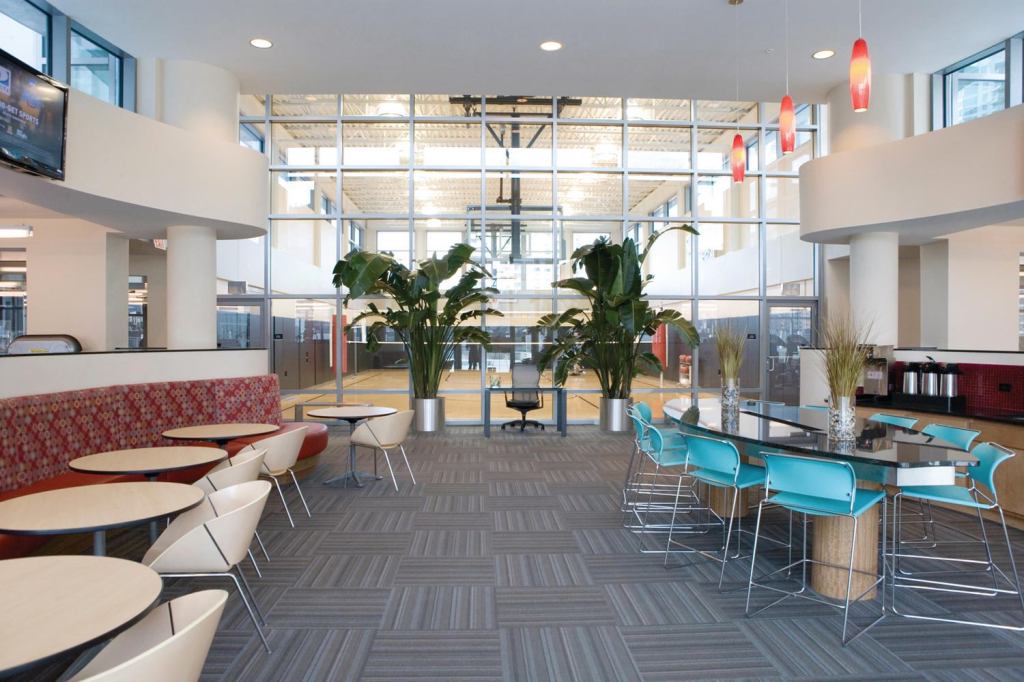
Fifield says Alta at K Station is competing with an additional 2,200 units worth of Chicago lease-ups, and while his comp reports show that everyone is benefiting from a velocity boost, Alta is thus far outperforming its peer group—an achievement that Fifield attributes directly to property perks. “It’s the best amenity package, and I don’t say that subjectively,” Fifield claims. “The property has a 32,000-square-foot club level, an Olympic-size pool, two gyms, a movie theater, and a full-size basketball court.”
Prospect-friendly amenities need not be physical features, though. To that end, on-site managers looking for a change in fortune might take a closer look at smoking policies. “We did a survey midway through our last lease-up to determine why more people were leasing, and almost 80 percent said one of the major signing factors was that it was a smoke-free building,” Clare says. “We were stunned, and we’re taking existing buildings and making large portions of them smoke-free because of that success.”
The Value of Marketing
While neighborhood location is a bit tough to augment once the shovels hit the ground, property managers should take note that it’s not just the Chicagos and New Yorks and D.C.s of the world seeing leasing success. In Albuquerque, N.M., Phoenix, Ariz.-based Alliance Residential fully leased up The Town Center Apartments’ 240 units in just three months after five months of pre-leasing begun in February 2009 filled 10 percent of the property’s apartments (and took a chunk out of Albuquerque’s average three-month new lease-up rental concession).
“The building outperformed the concessionary targets by $144,000 [at $600 a door, generally within a one-month-free range] by the end of the year 2009,” says Brad Cribbins, Alliance’s senior vice president of the Southwest and Mountain regions. “On top of that, we beat occupancy velocity by $156,000 [at $650 per door], so, all in, this asset beat its targets from a budget perspective by $330,000 in its first year. In-place pro-forma rents on one-bedroom units were $872 to $1,029, and we ended up at $925 to $1,050, so we not only beat projections in terms of concessions and velocity, we’re actually raising rents here.”
In addition to its neighborhood (just steps away from the 25,000-student University of New Mexico) and amenities (stadium seating theaters, icafés, fitness centers), Cribbins attributes The Town Center’s success to a well-focused marketing and sales effort and a confident, cash-motivated leasing team. Well-placed, colorful signage targeted the student population, a nearby Air Force base, and the International Airport. In addition, Alliance got print ads into local rental magazines four months prior to first occupancy, while leasing agents were commissioned to make huge cuts from market concessions.
“Most of the lease-up budgets were built in the tail end of 2009 when things were still pretty sour, and we’ve found that there probably was an overstatement of the negative, so one of the things we’ve decided to do was [to give commissions based on recovery of the concession gap],” Cribbins says. “The early stages indicate that we are beating our numbers, and people are building momentum and confidence and keeping a more positive perspective on the future. That’s what gets you back into the game.”
