
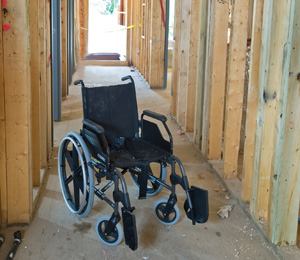
Such a future will perhaps force a change in the complexity of fair housing laws, the fervor with which alleged violations are pursued, and the tactics of apartment owners large and small who have a vested legal and economic interest in providing accessible housing to the disabled. Unfortunately, Jody Mahon and countless other victims of housing discrimination based on disability will never benefit. At the request of Mahon’s estate, HUD will continue to pursue the charges levied against Crompond Apartment Owners, which did not return calls seeking comment. In the meantime, according to an Internet listing on the Westchester-Putnam MLS, a one-bedroom unit is currently available at Stonegate Apartments featuring new kitchen appliances, crown molding, and two parking spaces directly in front of the unit.
FAIR HOUSING: A TIME LINE 1866: Congress overrides President Andrew Johnson’s veto of the Civil Rights Act, guaranteeing all U.S., citizens, including freed men, the right to purchase, lease, sell, hold, and convey real estate and personal property. Persons who denied these rights were guilty of a misdemeanor and faced a fine and/or imprisonment.
1948: The U.S. Supreme Court unanimously rules 6-0 in Shelley v. Kraemer that while racially restrictive real estate covenants could stand, enforcement of such covenants in state courts violated the equal protection clause of the 14th Amendment and amounted to state action in violation of the U.S. Constitution.
1963: In a nationally televised address, President John F. Kennedy calls on Congress draft federal legislation guaranteeing civil rights equality to all U.S. citizens.
1964: Title VI of the Civil Rights Act of 1964 prohibits discrimination on the basis of race, color, or national origin in programs and activities receiving federal financial assistance, including housing programs administered by the federal government.
1968: Title VIII of the Civil Rights Act of 1968—also known as the Fair Housing Act (FHA)—prohibits discrimination in housing based on race, color, religion, or national origin. It outlaws the refusal to sell or rent a dwelling based on discrimatory factors; discrimination in the terms, conditions, or privilege of the sale or rental of a dwelling; advertising that indicates preference or discrimination; coercing, threatening, intimidating, or interfering with a person’s enjoyment or exercise of housing rights based on discriminatory reasons; and retaliating against a person or organization that aids or encourages the exercise or enjoyment of fair housing rights. The disabled are not included as a protected class.
1973: The U.S. Rehabilitation Act prohibits discrimination on the basis of disability in programs conducted by federal agencies, including housing programs administered by the U.S. Department of Housing and Urban Development (HUD). The Act states that “no qualified individual with a disability in the United States shall be excluded from, denied the benefits of, or subjected to discrimination under” any program or activity that either receives federal aid or is conducted by any executive agency.
1988: Congress passes the Fair Housing Amendments Act of 1988, which bars discrimination in the sale or rental of housing on the basis of a disability, and requires the construction of new multifamily units designed for first occupancy after March 1991 to meet certain adaptability and accessibility requirements. Also grants enforcement authority to HUD.
1990: President George H.W. Bush signs the Americans With Disabilities Act, granting legal protection in employment and housing to the disabled, who are defined as a protected class for the first time under federal law.
March 13, 1991: Cut-off date for multifamily properties exempt from accessibility design and construction requirements under the FHA. Any property with four or more units granted a certificate of occupancy after this date must comply.
Feb. 12, 2001: In the first large-scale settlement of alleged FHA violations, Houston-based Camden Property Trust, along with Becker Built and George F. Tibsherany, agree to a $1.9 million settlement to resolve accessibility issues at eight Las Vegas apartment complexes.
June 2005: Archstone-Smith enters into a settlement consent decree with the Washington, D.C.-based Equal Rights Center (ERC), agreeing to remediate thousands of apartment units at a cost of more than $20 million. Many industry observers believe the settlement was made in haste, encouraging the ERC to pursue additional lawsuits against multifamily developers.
July 2007: The Bozzuto Group enters into a consent decree settlement with the ERC, agreeing to rehab 2,000 existing apartment and condo units at 27 properties and, for the first time, to extend accessibility features to townhomes and single-family homes not covered by federal accessibility statutes.
September 2007: The 9th U.S. Circuit Court of Appeals rules 2-1 in Garcia v. Brockway that a discrimination suit under the design and construction requirements of the FHA must be brought within two years of the issuance of a certificate of occupancy.
May 2008: The broader, 11-judge 9th U.S. Circuit Court of Appeals, which oversees the Western states, including Arizona, California, Nevada, Oregon, and Washington, upholds the decision in Garcia v. Brockway, establishing a two-year statue of limitations in bringing a discrimination suit against a multifamily developer for design and construction violations of the FHA.
July 2008: The U.S. Department of Justice (DoJ) proposes revised rules under the ADA to clarify construction formulations, allowing for greater latitude and providing greater detail about specific building elements and construction practices.
August 2008: The U.S. Attorney’s Office in Manhattan sends notice to dozens of apartment owners in the city that many of their units are not in compliance with fair housing codes. The companies, which include notable developers such as Related Cos., say their projects were built according to local building codes. More than 100,000 units could be affected. Soon after, the DoJ files a lawsuit against AvalonBay Communities, alleging accessible housing violations at Avalon Chrystie Place, its 361-unit, mixed-use project in New York City.
BY THE NUMBERS No. of disabled people in the United States:
51.2 million
No. of fair housing complaints filed with the U.S. Department of Housing and Urban Development (HUD) in 2007:
10,154
Proportion of all HUD fair housing complaints in 2007 that were based on disability:
43%
HUD complaints dismissed in 2007 for lack of reasonable cause:
39%
HUD complaints that resulted in an actual charge in 2007:
1%
No. of accessible housing cases filed by the U.S. Department of Justice (DoJ) since 1990:
82
Damages paid to victims of discrimination in housing as a result of DoJ settlements:
$5 million
HUD budget line item for funding private advocacy and enforcement groups:
$19.8 million
