Overall multifamily fundamentals should stabilize by the second quarter of 2021, with steady recovery anticipated through the second half of the year, according to CBRE Research’s latest “U.S. Multifamily Figures” report.
Looking at the fourth quarter of 2020, market demand remained strong despite the COVID-19 pandemic and the resulting economic recession. Net absorption totaled 55,600 units, which was higher than expected given normally weak leasing trends toward the end of the year and during recessions. Annual net absorption totaled 190,600 units—“a very respectable level given the economic recession,” according to CBRE—but down 39% from 2019.
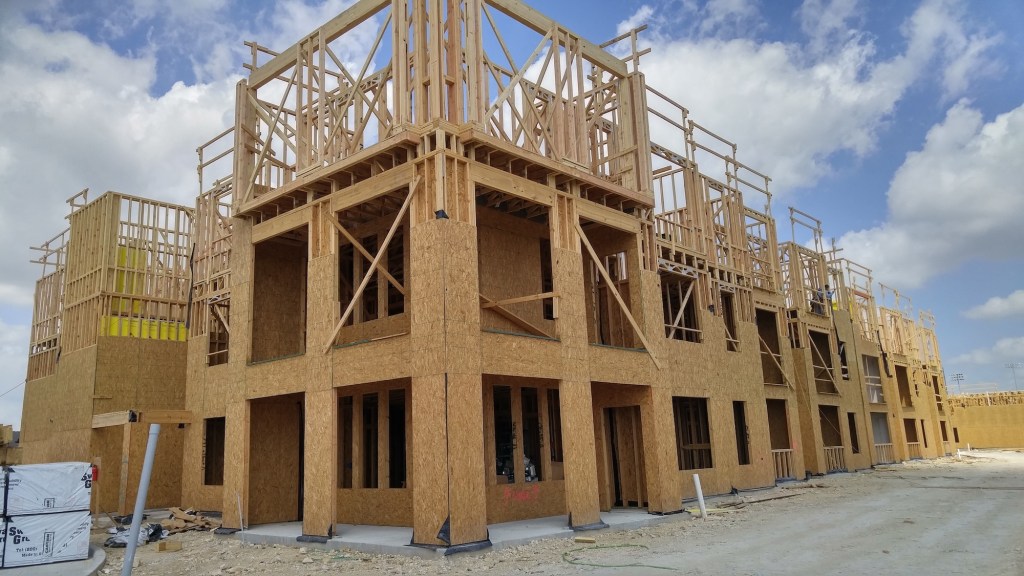
Annual completions totaled 279,600 units, marking the second most in at least 25 years and a 5.9% increase over 2019. Fourth-quarter completions was the highest in 10 quarters at 81,100 units. Multifamily construction starts totaled 427,100 units through November, up 13.8% from the same period a year ago. Nearly all completions came from construction projects that were started prior to the 2020 recession, and most of the projects started last year were planned prior to the pandemic.
CBRE noted that high levels of permit activity show that developers are looking beyond the pandemic. For 2020, 429,400 multifamily units received permit approval, according to the Census Bureau, down 10.8% year over year. The fourth quarter’s permit total came in at 110,700 units and marked the highest quarter of the year.
New York, Houston, and Dallas led the nation for most multifamily units completed last year. Roughly 26,000 units were delivered in New York, including Long Island and Northern New Jersey. Houston had 18,000 units, and Dallas came in with 14,200.
According to CBRE, among the 22 markets with the highest completions last year, no markets had completion-to-inventory ratios greater than 4% in recent quarters, a measure of overbuilding risk. However, six markets had ratios greater than 3%—Charlotte, North Carolina (3.8%); Austin, Texas (3.6%); San Antonio (3.4%); Kansas City, Missouri (3.4%); Minneapolis (3.2%); and Fort Lauderdale, Florida (3.1%).
The overall vacancy rate rose only 10 basis points to 4.5%, up year over year by 50 basis points. “Given usual seasonal weakness in the last quarter of the year, the rise of only 10 basis points was good news for the market,” stated the report. CBRE said it expects vacancy to reach its highest point in the first quarter of 2021 and then trend downward with increased demand and overall market improvement.
Class A properties were more affected by the pandemic and resulting market downturn than Class B and C assets. Class A vacancy was 5.4% in the fourth quarter compared with 4.3% for Class B and 3.7% for Class C. Renters of Class B and C properties were harder hit by job losses than those in Class A assets; however, they had fewer housing options and tended to move less.
“Additionally, the recession led to some flight from quality, thereby increasing demand for more affordable housing, and Class A assets continued to face competition from new supply,” according to CBRE.
The report also showed that suburban submarkets continued to outperform urban submarkets in the fourth quarter, with out-migration hitting those urban cores, especially the gateway markets. CBRE does not expect urban submarket recovery to begin in earnest until the fall.
According to CBRE, average rents declined 1.6% in the fourth quarter to $1,666 per month, which is a year-over-year decrease of 4.2%. Declines are expected in the first half of the year, with rents expected to increase in the third quarter and reach pre-COVID levels by the first quarter of 2022. In addition, three of the hard-hit gateway cities—San Francisco, San Jose, and New York, are skewing the U.S. average rent downward. If removed from the U.S. average, the year-over-year decline would be 1.3%.
For rents, the Mountain West had the highest percentage of markets with year-over-year growth, with five of the seven metros recording growth of more than 3% last year. The Midwest and Southeast followed. Most smaller markets saw rent growth last year, while all gateway markets had losses. The larger markets with the best rent performance, according to CBRE, were California’s Inland Empire; Phoenix; Tampa, Florida; Long Island; Baltimore; and Atlanta.
Multifamily investment in the fourth quarter reached $56.7 billion, more than double the volume in the third quarter and slightly more than the fourth quarter of 2019, marking a new high since Real Capital Analytics began collecting sales data 20 years ago. Annual investment volume came in at $138.7 billion, down 27.6% year over year.
“CBRE research expects higher multifamily investment volume in 2021 due to sustained investor interest and more confidence in market performance, especially in the second half of the year,” according to the report. “Increased activity by institutional investors, public REITs, and international buyers also should boost activity.”