
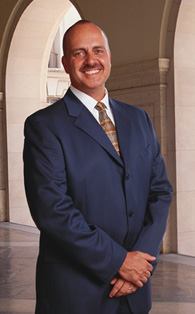
Perceived Risks There are several negative myths related to the student housing industry. The first is that since you’re dealing with students, you must have a larger rent collection problem and therefore bad debt must be greater, because students are not responsible, explains Trubiana.
“That’s really a fallacy,” he says. “In all of our leases, we have the parents co-sign the lease and we often set up the payment schedule where the first payment is made in advance of taking possession of the apartment.” As a result, American Campus’ accounts receivables for past due rent averages less than one-half of 1 percent.
“There also is a perceived risk that student housing has to mean large amounts of deferred maintenance or malicious damage,” says Trubiana. It can happen without proper management supervision and an abundantly clear policy that malicious damage will not be tolerated, he says. But if the community is properly managed and everyone is aware that damage won’t be allowed, providers shouldn’t have a problem.
If a resident causes intentional damage, they are dealt with immediately, says Trubiana. “By doing that, we have very little damage at our properties,” he says.
The Next Chapter While more companies may try to enter the market because of the favorable demographics (see “Growing Demand” ), Trubiana believes that consolidation will eventually lead to two or three frontrunners.
In the meantime, many merchant builders rushed to market to try to take advantage of the opportunity, and have caused some overbuilding in various markets, says Trubiana. As a result, American Campus is currently developing only three off-campus development projects. These projects are infill sites with significant barriers-to-entry and close to the University of Colorado at Boulder; California State University-San Bernardino; and California State University-Fresno.
The company plans to acquire four to five off-campus properties per year that provide competitive advantages such as excellent location or a strong amenities packages in the markets that have strong demographics and barriers-to-entry. However, the current growth segments in the industry is in on-campus development, says Trubiana. In the next three years, the company expects to double in size. Until recently, colleges and universities avoided working with private sector housing providers. There was an underlying fear that the business mission of the providers would override the academic mission of the university, explains Bayless. However, by the 1990s, many universities recognized that the private sector could deliver a better product quicker and at a better price.
Trubiana bases the company’s success on its commitment to create satisfied customers and to go beyond their expectations. “It boils down to people and relationships,” he explains. “If we come up with a new creative design, add an amenity that no one thought of or a new floor plan, we have that competitive edge for a very short period of time, because it’s all open and public. The key to the long-term success is having the best and brightest on your staff.”
For the long-term growth of the company, Trubiana believes the company is ideally suited for on-campus development. “We have a wonderful track record,” he says. “We’ve never had a property go over an approved development budget and we’ve never missed a fall opening.”