
Healthy Demand
More than lifelong learning, these projects also include access to health care.
“More and more people are wanting to age in place,” Jones says. “They know the need for health care can hit quickly, so they look for properties with built-in continuing care facilities, or ones that are adjacent to high-quality medical centers.”
The continuing care retirement community model includes on-site care at the same rate as “independent living,” with additional charges for meals or other ancillary services.
Kendal’s continuing care retirement community in Oberlin, Ohio, provides residents with “a continuum of care so they never have to move away from home and have the security of services on one campus,” says Barbara Thomas, CEO of Kendal at Oberlin.
Adjacent to the Oberlin College campus, the community has 192 independent living units, 24 assisted living units, and a 42-bed nursing center. There’s also a pharmacy, home care services, and on-site rehabilitation therapy.
Safe and Sound
Creating a sense of community?and security?is paramount in attracting the right tenants.
“[There is] a balance between complete integration with the surrounding neighborhood found in multifamily design and the self-containment often inherent in senior housing projects,” says Robert Steinberg, president of The Steinberg Group. The San Jose-based architectural firm designed Hyatt’s Classic Residence community next to Stanford University. The project includes 388 independent living apartments, 38 assisted living apartments, and 44 skilled-nursing beds.
To manage the balancing act, Steinberg suggests designing with these concepts in mind:
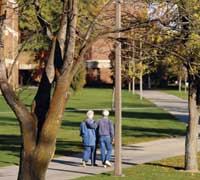
E Encourage socialization. Use courtyards and community rooms to promote interaction. Connect them to the outside through large windows with views onto natural areas or surrounding commercial and residential space. Create walking paths, tennis courts, and other activity areas. Classic Residence, for instance, is set in a park-like environment with walking paths that lead to an upscale shopping area and the Stanford Hospital.
E Emphasize security. “Security is a major factor and must be carefully addressed so as to provide a secure environment without being oppressive,” he notes. That means including surveillance, coded entryways, or fully gated communities.
E Approach design efficiently. The creation of different floor plans will appeal to a broader market. At Capstone Village, 108 apartments range from a one-bed, one-bath at 758 square feet to a two-bed, 2.5-bath with den at 2,000 square feet. Monthly rents range from $850 to $3,400 (after variable entrance fees).
E Consider mobility. Though active, many tenants will experience decreased mobility during their stay. Steinberg suggests paying attention to details such as placement of cabinetry, lighting, way-finding, and circulation. Developers must also endeavor to replicate design elements found on campus buildings to strengthen the sense of connection and to ease approval processes.