As living space starts to become scarcer in urban areas, researchers at Boston-based Ori have begun looking into what could happen were they to apply founder Hasier Larrea’s MIT Media Lab–backed tech knowledge to interior architecture and furniture.
“In a world that is massively urbanizing, cities need to come up with new, innovative ways to remain sustainable and competitive,” says Larrea. “More and more, people want to live in city centers and economic and social hubs, but urban space is becoming more scarce and expensive by the minute. Square footage is at a premium.”
Hence the idea for adaptable, robotic furniture—ideal for small apartment units and spaces.
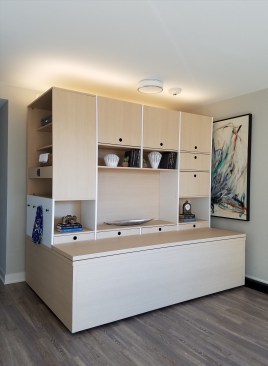
Leah Demirjian
MFE checked out ORI at the Vintage Apartments in D.C.'s Mount Pleasant neighborhood.
After several prototypes and a $6 million fundraising effort led by Khosla Ventures, Ori was introduced to a handful of 300- to 600-square-foot studio units in apartment buildings across 10 major cities in the U.S., including Boston, Seattle, and San Francisco, as well as Canada.
Ori’s robotic-furniture system eliminates the need for a traditional bed, storage, table, and excessive walls—or “space killers,” as Larrea calls them. It also solves some of the biggest challenges of making small apartments comfortable for a couple or a pair of housemates, such as establishing a division of spaces and diminishing the need for partitions. Through clever shape-shifting and storage solutions, the system makes a studio apartment feel like a one-bedroom—without the higher price tag.
Ori works with smart-home devices such as Amazon’s Alexa to reconfigure a room with either a voice command or the touch of a button. In the morning, instructing Alexa to make the bed slides the bed into its module and pulls out a walk-in closet. When residents are working from home or dining, the module contracts to reveal a small table and enlarged living space. Unlike Murphy beds or collapsible surfaces, the system centers on ease of use and smooth, elegant transitions.
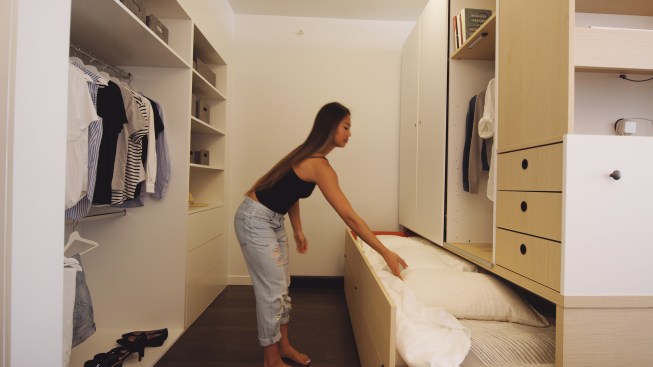
Courtesy ORI
Ori is testing the robotic system, which is currently available exclusively to real estate developers, in 13 units in 10 markets. After a round of feedback, the team will make any improvements needed before launching final production in early 2018. Eventually, the team hopes to expand similar robotic systems to other small living spaces, such as dorms or hotel rooms.
“Ori wants to empower people to live large in a small footprint, using technology to create spaces that magically and effortlessly adapt to your activities,” says Larrea.