DALLAS
Metro Data
Population: 1.3 million
Units built since 2012: 44,427
Average rental rate: $1,129
In most cities, when developers came back after the recession, they concentrated their efforts in the downtown core areas where the walkable lifestyle and unique amenities would always attract renters. The story was no different in Dallas: Any lots left from the last cycle in the city’s core Oaklawn and Uptown submarkets were gobbled up in the first few years back.
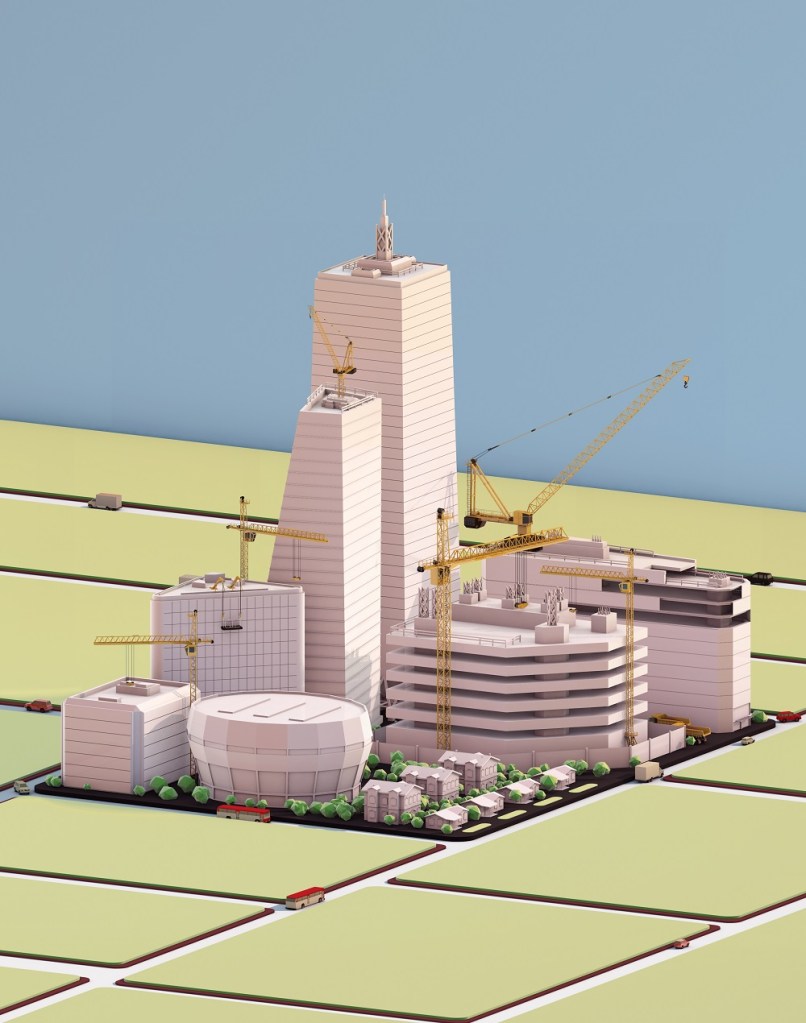
What is unique for Dallas this cycle is the number of high-rise projects. Most of the sites left in Dallas are a half acre to a full acre, but not much bigger. The cost of such a small site has forced developers to go vertical to add enough units to make the deal pencil out. That’s also pushed rents, but everyone’s still waiting to see how the product performs.
“Those higher-rent, higher-cost, higher-density buildings have not been delivered yet,” says Matt Enzler, Trammell Crow Residential’s managing director of development. “So that story is yet to be told. The stuff that has opened has done really well, exceeded the pro forma, but we’ll see how deep that market is.”
The high-rises are being delivered in submarkets with average incomes of $100,000, and Enzler estimates the buildings are mainly inhabited by renters by choice who are only spending 12% to 20% of their income on rent. With that balance, the higher rents haven’t hit an affordability ceiling yet.
The majority of the new high-rises are set to deliver at the end of this year into early next year. While developers wait to see how they do, they’ve branched out farther across the Dallas metro. Uptown-adjacent communities have seen a spur of projects, largely because residents could save as much as $400 a month by living a mile farther out from downtown.

Aytek Gurkan
Dallas’ urban growth has only been a small percentage of the city’s overall metro growth. The Oaklawn submarket accounted for just 15.8% of all multifamily deliveries between 2012 and the first quarter of 2016. The Plano–McKinney submarkets accounted for 14.9%.
“There’s a tremendous amount of investors focused on high-growth suburban submarkets in Dallas,” says Rick Perdue, managing director of Mill Creek’s Dallas operations.
Employers including Toyota, JP Morgan, Liberty Mutual, State Farm, and Raytheon have all moved their offices along the Dallas–Plano corridor and brought thousands of jobs with them. The surrounding submarkets are creating pockets of walkable neighborhoods from where, Perdue suggests, renters and home buyers alike are happy to drive to work five days a week and then be able to ditch the car for the weekend.
Zoning and entitlements in the entire Dallas–Plano metro area have gotten tougher, though, limiting what developers can do. Enzler notes that Plano has essentially put a moratorium on new multifamily development for now.
The city of Dallas has also developed a task force in the past two years to address the city’s affordability issue. Developers on the task force are weighing how to create affordable properties without hampering development. City Hall is analyzing new entitlements for affordability requirements, making developers cautious about sites that would possibly need to go through a re-entitlement process.
Overall, though, the Dallas market is healthy, and developers hope to see continued record absorption rates on par with those of the past four years.
“As long as the jobs continue to come to Dallas, we should continue to be in good shape,” says Perdue.
HOUSTON
Metro Data
Population: 2.3 million
Units built since 2012: 46,556
Average rental rate: $1,079
When the recession struck, Houston remained a powerhouse, thanks largely to the oil industry. It only lost one in 22 jobs when the crash hit; was the first city to recoup all the jobs it had lost; and even added two jobs for every job it had lost, according to the Bureau of Labor Statistics.
Houston’s metro area has been the most active city in the country for multifamily residential development, with nearly 60,000 units being delivered since 2010.
When that development is mapped out across the metro, the gravitational pull of the Energy Corridor is clear: Development is concentrated in the downtown submarket of Montrose–River Oaks, just slightly west of the central business district. From there, the development hot spots stretch farther west, out along the Corridor.
The Montrose–River Oaks submarket has experienced the second-most deliveries of any submarket in the country since 2010, with 12,886 units.
“Montrose is a great neighborhood to get into because it’s a central location; it’s a really cool neighborhood; it’s got some of the best restaurants in town; and it’s got a lot of great nightlife,” says Jeb Cox, managing director for Mill Creek’s Houston division.
At the onset of the recovery, city officials in Houston also started an initiative to revamp Houston’s downtown areas into a pedestrian-friendly community. Residential developers who participated in the initiative to provide different elevations with prominent sidewalks were given a $15,000 tax credit per unit built.
Cox attributes Houston’s shift from podium- and wrap-style communities to higher-density projects to this urban initiative, along with the escalating costs of land, labor, and construction.
Aytek Gurkan
Yet, all of that building accounted for just 21.8% of all unit deliveries in the Houston metro area. Cyrus Bahrami, managing director of South Texas for Alliance Residential, estimates nearly half of the multifamily residential deals he’s made this cycle in Houston were actually suburban, with more than a few along the Energy Corridor.
There isn’t much development going on in Houston now, though. Since oil prices plunged last summer, apartment construction in the metro has been on an indefinite pause as investors and developers wait to see if the current supply will be absorbed. “It actually wasn’t a bad pause, because we had so much development going on,” says Bahrami.
Right now, one-month-free concessions are popular. Some developers are even at two months free. But considering that rents have risen 13.4% in the past four years in Houston, the rents these communities are fetching now are on par with or better than the level at which the projects were underwritten, even with the concessions.
At one project that Alliance opened for pre-leasing recently, the company rented 45 units in the first month, which is still a healthy pace given current market conditions.
Of the few projects still under way, most are concentrated in the downtown core markets, on what Cox describes as “trophy sites.” Even if developers find an equity partner, they often have problems securing a construction loan. But eventually those lenders will come back.
“We’ve got close to 7 million people in our market and we’re predicted to add another 1.5 million in the next 15 years,” says Bahrami. “[Houston] is a great place to live and work: low cost of living, very entrepreneurial. I see those as continued drivers for residential space.”
See next: San Jose and Seattle