SAN JOSE
Metro Data
Population: 1 million
Units built since 2012: 13,528
Average rental rate: $2,842
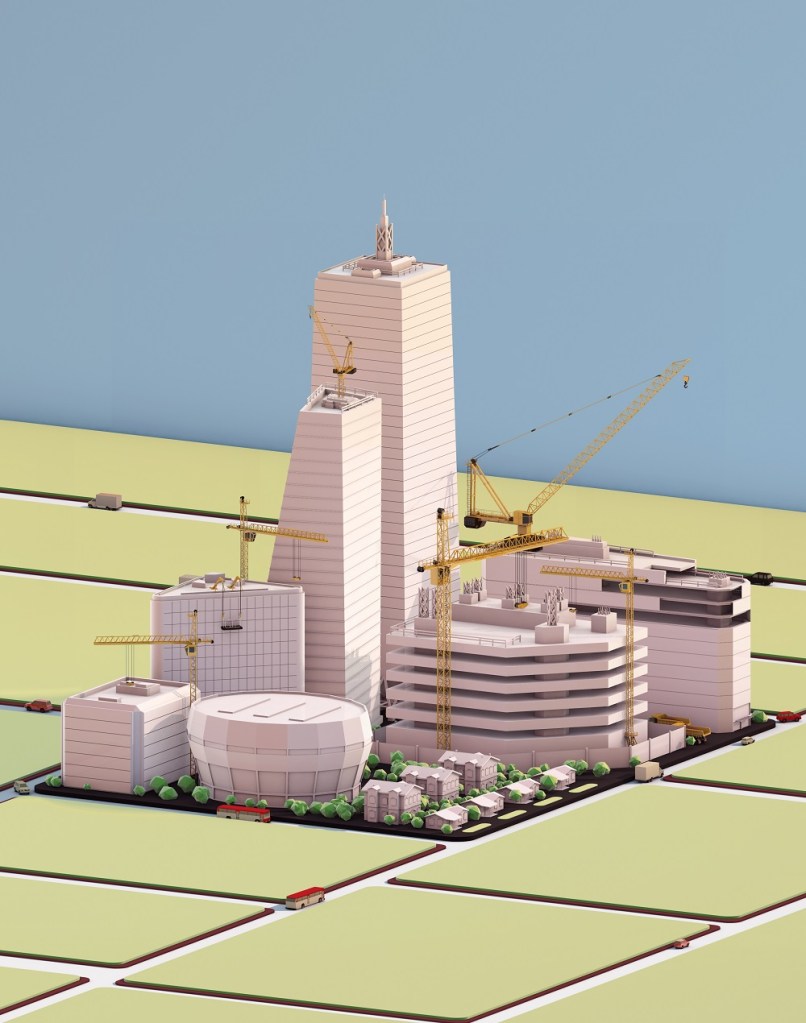
San Jose has had a plan on its books since the 1980s to restrict development in the North San Jose area in an effort to ease regional traffic concerns. In 2008, the Vision North San Jose plan was formed, allowing for 32,000 residential units in four phases. The city is now in the first phase, which permits 8,000 residential units and 7 million square feet of industrial space.
Michael Brilliot, division manager for the city’s Planning, Building & Code Enforcement division, says that before phase two of the plan can commence, the designated amount of residential and industrial space in phase one must be developed.
The problem is, however, that the residential development has easily outpaced the industrial. Currently, 7,940 housing units and approximately 1.2 million square feet of industrial space have been built. “If you allow all of the residential to go forward regardless of whether you’re building the employment uses, all the residential will get built very quickly and the employment uses won’t get built,” Brilliot explains.
That presents another problem. “One of the dangers is that there’s such demand in housing that housing developers will [often] pay a lot more for land than commercial developers in this town, so that, then, discourages anyone from building commercial development because the landowner is going to be looking to sell it at housing prices,” Brilliot says. “Commercial developers can’t make their projects pencil [out] paying housing prices.”
Aytek Gurkan
North San Jose is the city’s primary employment hub, mostly tech and manufacturing, Brilliot says. According to Axiometrics, 65.7% of units delivered in the market since 2012 have been in Northeast San Jose.
Mark DeGraff, a senior regional property manager at Austin, Texas–based Pinnacle, says there was pent-up demand for housing following the recession. A 271-unit property Pinnacle manages in North San Jose that opened in October was fully leased in five months, he says, versus the typical eight to 10 months.
The city’s downtown has had a history of underdevelopment since the 1950s, Brilliot says, so there was no need for restrictions there. It wasn’t until the 1990s and the Internet boom, he adds, that apartments started to be built in the area. “If housing wants to build downtown, then that’s great; let’s jump on the bandwagon as a way to incentivize the growth of downtown overall,” he says of the city’s mind-set decades ago.
But now, the amount of development is causing a pause, he notes, as more units come on line. “It’s really over the last year and a half that people are like, ‘Whoa, maybe we have too much of a good thing and we need to be more thoughtful on where [development] should go and where we want to reserve areas for employment,’ ” he says.
Is there a danger of San Jose being overbuilt? Wait and see, says DeGraff. “It’s amazing to see that even with all this new development, all this supply, there’s not a lull that we’ve seen in the market,” he says. “At least, not yet. I have a feeling we’ll probably see a reduction in occupancy … . It’s just hard to say when.”
For Leslye Corsiglia, executive director, SV@Home, an organization advocating for affordable housing in the Silicon Valley, the region as a whole isn’t creating enough housing to keep pace with the number of jobs created.
“We also need more subsidies,” she says. Of the 8,000 units released in phase one, less than 7% were affordable.
SEATTLE
Metro Data
Population: 684,000
Units built since 2012: 26,552
Average rental rate: $1,815
Amazon, Alibaba, Ebay, Expedia, Facebook, Tableau, Twitter, Zillow. These are just a few of the giant tech corporations that either have an established footprint in Seattle or have just recently planted some very large roots there. For the most part, these employers have been concentrated in Seattle’s downtown core. An estimated 15 million square feet of office space have been added in Seattle’s South Lake Union area, with Amazon occupying about 60% of it.
What’s more, these various employers have added roughly 215,000 jobs to the Seattle market since 2010. Residential developers have been working to build homes for those workers over the past several years.
According to Axiometrics, the downtown submarkets of Queen Anne and Capitol Hill have accounted for 39.9% of all deliveries in the Seattle MSA since 2010.
“Jobs in the market are good, and people want to live downtown as opposed to some distance away where they’re going to have to take public transit or commute,” says Washington Multi-Family Housing Association executive director Jim Wiard.
Vancouver, Wash.–based Holland Partner Group has built seven communities of more than 100 units each in the downtown core this cycle, with another four in the works now. Tom Parsons, president of Holland Development, says most of the residential construction has concentrated in the submarkets surrounding the business growth.
Aytek Gurkan
“There’s a lot of desire to live in these peripheral neighborhoods like First Hill, Capitol Hill, and Queen Anne. I think those all have somewhat of a village–neighborhood–community feel. It’s different, less urban,” Parsons says.
Holland Development recently completed 815 Pine, a 386-unit project near the I-5 expressway, where residential construction has been concentrated. Parsons notes that the only areas left for similarly large, institutional-size projects are between Pine Street and South Lake Union.
Luckily for developers, high-paying tech salaries enable these incoming employees to afford the expensive new, amenity-rich product. With Seattle’s area median income of $71,237, even developers offering 20% of a project’s units at 65% to 85% of the area median income (AMI) means they’d be looking for incomes ranging from $46,000 to $60,000.
Development is concentrated around the job core for two primary reasons: There’s nowhere to park cars in the city, and having to rely on the bus routes could possibly quadruple the length of a resident’s commute.
Most people have to ditch the car altogether and choose living in a location from which they can walk, or at least bike, to work. Seattle has invested nearly $36 million in the past four years in bike-friendly improvements throughout the city, such as protected bike lanes.
The city is starting to feel the crunch of development, though. The problem in the Emerald City isn’t concessions or overdevelopment—it’s construction costs.
“The construction costs, the land costs continue to go up through this cycle. That’s going to create a tipping point at some point where construction is going to start phasing back a bit,” says Wiard. “We’re probably close to that now. If we were to pinpoint where we are on the roller coaster, we’re probably at the peak now and turning downward just a little bit in the market.”
Nonetheless, Wiard anticipates another 40,000 to 60,000 units still in the pipeline for Seattle.
Seems those cranes aren’t out of the landscape just yet.