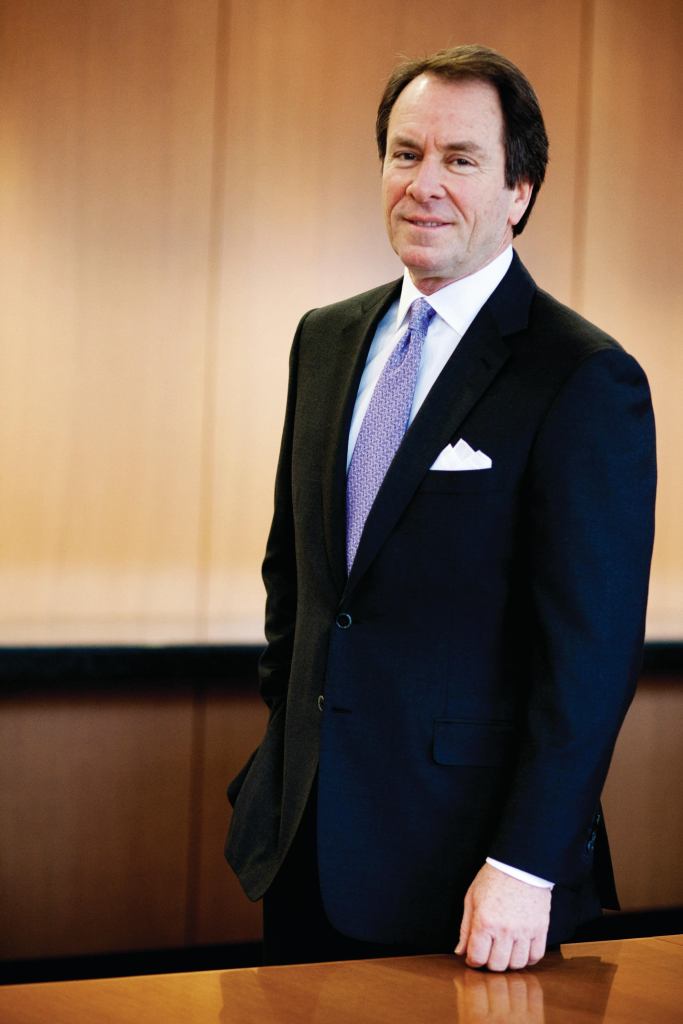
After building single-family homes for World War II veterans in the ’50s, Carl Milstein, a prominent Cleveland developer and self-made millionaire, started Associated Estates Realty Corp. in the ’60s. Friedman began at the company the old-fashioned way—he married the Milsteins’ daughter in 1972. Three years later, at the age of 24, he purchased the company from his father-in-law, who ended up serving prison time in the late 1970s for offering illegal gratuities to a federal housing official. Milstein passed away in 1999.
In 1993, a number of private real estate firms were going public. Associated Estates (then the dominant apartment owner in Cleveland and Akron, Ohio) joined them. Not only did the aging Rust Belt portfolio (average age of 19 years in 1993) burden AEC in the late ’90s, but so did some questionable moves.
In 1998, the company paid $306.3 million—made up of $118.1 million of stock, $182.1 million of variance debt, and $6.1 million of various liabilities assumed in stock—for MIG Realty Advisors, a pension fund advisor with 13 properties. AEC acquired the asset management contracts, the property management contracts, and the advisory business. The problem wasn’t just the acquisition, though; the transaction didn’t have a clause collaring the deal if Associated Estates’ shares fell below a certain price. At the time the agreement was signed, AEC’s stock price was near an all-time high. But by the time shareholders approved the deal, the stock price had fallen. AEC says it would have made the deal anyway, but analysts contend that the company should have put a collar on the deal if prices fell too far. Wall Street hit Friedman hard for not using an investment bank on the deal, and he was dinged again for locking in rates too soon on the acquisitions.
“In 1999, we bet that rates were going up,” Friedman says. “So we put a high-rate mortgage on [the MIG acquisitions].”
That caused the rating agencies to lower their grades of AEC—something from which the REIT still hasn’t recovered. Around that time, the company’s share price began a steady decline—bottoming out at $5.29 per share in March 2003 (though after the Great Recession, it fell to $4.87 in February 2009). Its portfolio was plagued by a lot of affordable properties that investors just didn’t understand.
Collectively, these issues led to a major perception and public relations problem for Friedman. “Wall Street has a long memory,” he says. “It takes a long time to build up credibility and a short time to lose it.”
And by the start of the 2000s, Friedman had definitely lost credibility.
The Plan
In 2001, just before the Forbes article, Friedman led AEC through a comprehensive strategic planning process to survive and pull itself out of the problems of the late ’90s. Little did he know that the plan would also help AEC weather the economic storm that would hit seven years later.