
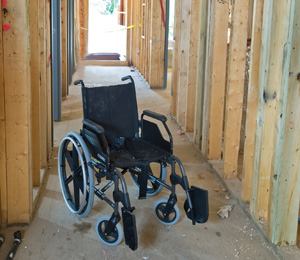
And that number is destined to grow as a new wave of disabled veterans return from combat and the general population ages. “We are going to have a lot more people who need accessible units,” says HUD Assistant Secretary of Fair Housing and Equal Opportunity Kim Kendrick. “It is a long-term commitment. In the end, more people are going to need accessible housing. If we can’t get as many units as we get now … it is going to be a mess at the end of the day for the baby boomers.”
Yet legislative and regulatory protection for the disabled—particularly when it comes to renting a home—is relatively new. Figuratively speaking, wheelchairs did not exist in the social fabric prior to the enactment of accessibility laws in the late 1980s. “Frankly, I don’t remember growing up seeing people in wheelchairs,” Kendrick says. “As a society, we kept the disabled hidden.”
But times change. “Now, we want [to embrace] those people as part of our society,” Kendrick says. “When the ADA [Americans With Disabilities Act] came around in 1988, I think people collectively said it is time to make a stand.”
Rooted in the civil rights movement that reaches as far back as slavery, fair housing protections were first extended to race, religion, and national origin under Title VIII of the Civil Rights Act of 1968, also known as the Fair Housing Act (FHA). Consideration for the disabled was first addressed under the Rehabilitation Act of 1973, which guaranteed those with disabilities equal access to federally funded programs—including subsidized housing. But it wasn’t until the passing of the ADA in 1990 that the disabled were designated as a protected class. It was President George H.W. Bush who signed the bill into law on July 26, 1990, noting then that it was time to “let the shameful wall of exclusion finally come tumbling down.”
Glen House, president, co-founder, and chief medical officer for Denver-based accessibility forum Disaboom.com, recalls the signing of the ADA—it was the same year he broke his neck skiing and became quadriplegic. Still, he describes his quest for rental housing over the past 20 years as difficult and questions why it took so long for meaningful legislation to be enacted, let alone enforced. “Were there no people with disabilities before 1990? Were there no wheelchairs?” he asks.
The “newness” of the laws is one reason complaints continue to pour in at alarming rates. A total of 4,410 disability complaints were filed with HUD in 2007—a whopping 43 percent of all fair housing complaints the agency received last year. And the number is rising, with disability complaints at the agency up 27 percent since 2004. HUD’s own field research also shows that the disabled face discrimination in the rental process roughly 50 percent of the time, and complaints regarding discrimination against the disabled outpace complaints related to race, religion, and national origin.
Once complaints are made, agencies must then balance funding and manpower to respond in a timely manner. And while HUD investigates every complaint it receives, the agency filed direct charges in only 1 percent of its cases last year. Meanwhile, the U.S. Department of Justice (DoJ), which also can investigate fair housing infractions, has tried to stay on top of ADA violations the past few years. DoJ says it has filed 79 lawsuits and three amicus briefs (opinions filed with the court on cases it is not a direct party to) addressing accessibility violations in multifamily housing since the passage of the Fair Housing Amendments Act in 1988. More than half—48 cases and one brief—have been filed since 2001. Additionally, DoJ Deputy Assistant Attorney General Jessie Liu testified before the House Judiciary Committee in June that in 2007, “[the DoJ] filed six accessibility cases, settled seven such lawsuits, and obtained favorable summary judgement rulings in two accessibility cases.”
A GRAB BAG OF REQUIREMENTS Faced with this volume of enforcement, the multifamily housing industry has scoured the landscape of construction and design experts looking for detailed guidance on what to do. They have come up short. In fact, one of the major gripes regarding compliance with federal accessibility laws is a perceived morass of legal and regulatory requirements complicated by undefined enforcement parameters between HUD and the DoJ.
What’s left is a collective feeling of ignorance in the construction community over who—if anyone—has the expertise necessary to affirm that a project is in compliance. In fact, many argue that the very inexact nature of large-scale construction projects often makes accessibility as defined by law difficult, if not impossible, to achieve. They say that there is no reasonable balance between zero-tolerance specs under the law and the real challenges of building high-rises where a few inches off is as close as you can get.
