
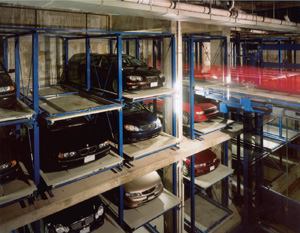
“It doesn’t matter if you’re in Charlotte, New York, London, or Tokyo,” Donnelly concludes. “This building would be unique and special. This is sort of like the crème de la crème. It’s the highest-end parking solution there is.”
Ava Tabb is a freelance magazine writer living in Chicago.
Resident Files The Other Side
Help residents deal with the disadvantages of modern automatic parking systems.
Though most residents love having an automated parking system, there are several drawbacks from a management perspective.
For instance, earthquakes and other harsh weather conditions can cause power outages to the parking systems, possibly causing them to shut down temporarily. Such technical problems often require a specially trained parking mechanic to fix them, which adds to repair time. In other instances, larger vehicles may require more spacious parking areas than the normal height and width needed for small-to medium-sized cars.
These disadvantages may frustrate residents who have to then wait a little longer to retrieve their cars. To address their concern, parking experts recommend constant communication and rapid response times.
Still, Carmen Klein, assistant manager at Camden Grand Parc Apartments in Washington, D.C., says the disruption is usually brief. “When there is a problem, we’ll just call a technician … to fix it,” she says. “It usually takes only 10 minutes.”